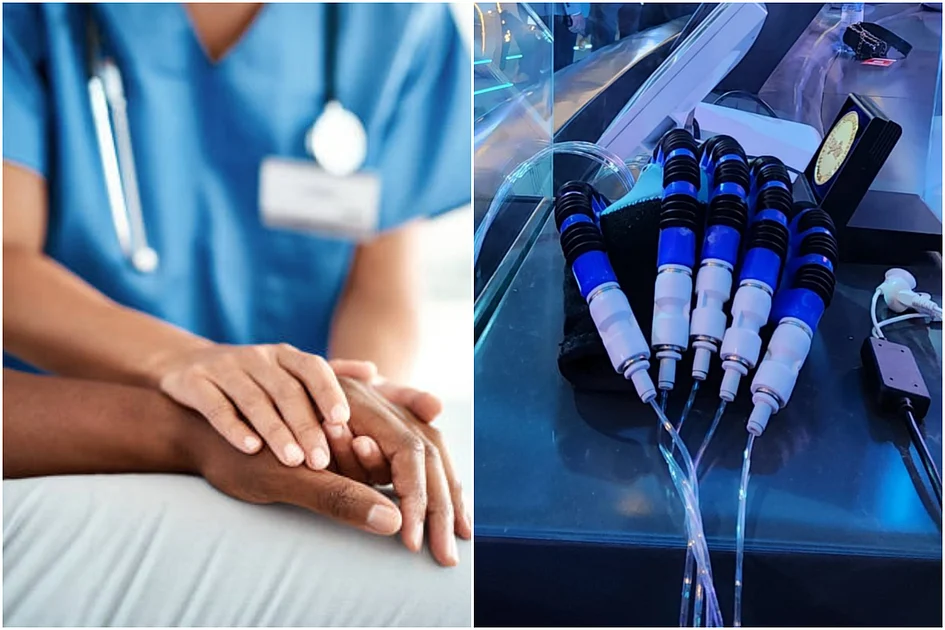
A groundbreaking soft robotic glove, weighing approximately 300 grams—equivalent to three eggs—is transforming rehabilitation for neurological patients across the UAE. The HandTasker Rehabilitation Hand, originally developed in Hong Kong, represents a significant advancement in neurorehabilitation technology for both adult stroke survivors and children with cerebral palsy.
This innovative device operates by detecting and amplifying faint brainwaves and muscle signals, translating them into physical movement through its robotic mechanism. Professor Raymond KY Tong, founding chairman of the Department of Biomedical Engineering, explained during the World Health Expo in Expo City that the technology essentially retrains neural pathways. “For patients who have lost movement ability due to stroke, this device helps retrain the brain and restore motor function,” he stated.
The rehabilitation process involves repeated sessions where the glove assists patients in performing hand movements. After approximately ten sessions, the brain begins forming new neural pathways that bypass damaged tissue, ultimately enabling regained hand function. This neuroplasticity-based approach offers particular significance in the UAE, where families frequently seek advanced rehabilitation options for neurological conditions.
The developers have created a specialized pediatric version featuring smaller sizing, softer joints, and additional padding for comfort. This adaptation has already been implemented in Asian special schools, with children as young as three years old successfully using the technology. For younger patients, the device incorporates gamification elements, allowing children to practice gripping objects, writing, or holding toys while making therapy engaging and enjoyable.
The glove’s practical design enables quick setup—approximately one minute for fitting and another minute for software calibration—allowing immediate commencement of therapy sessions. Its waterproof, soft material ensures both hygiene and comfort during regular use.
Unlike permanent medical devices, HandTasker functions primarily as a training tool, with most patients requiring it for only one to two months. This temporary usage reduces long-term costs and increases accessibility through rehabilitation centers rather than individual purchases.
Clinical trials in Hong Kong have demonstrated promising outcomes, with over 40 hospitals and centers currently utilizing the technology. Studies indicate approximately 80% of patients show measurable improvement in hand function following the rehabilitation program. The UAE introduction marks a significant expansion of this technology into Middle Eastern healthcare markets, potentially benefiting thousands of patients across the region.