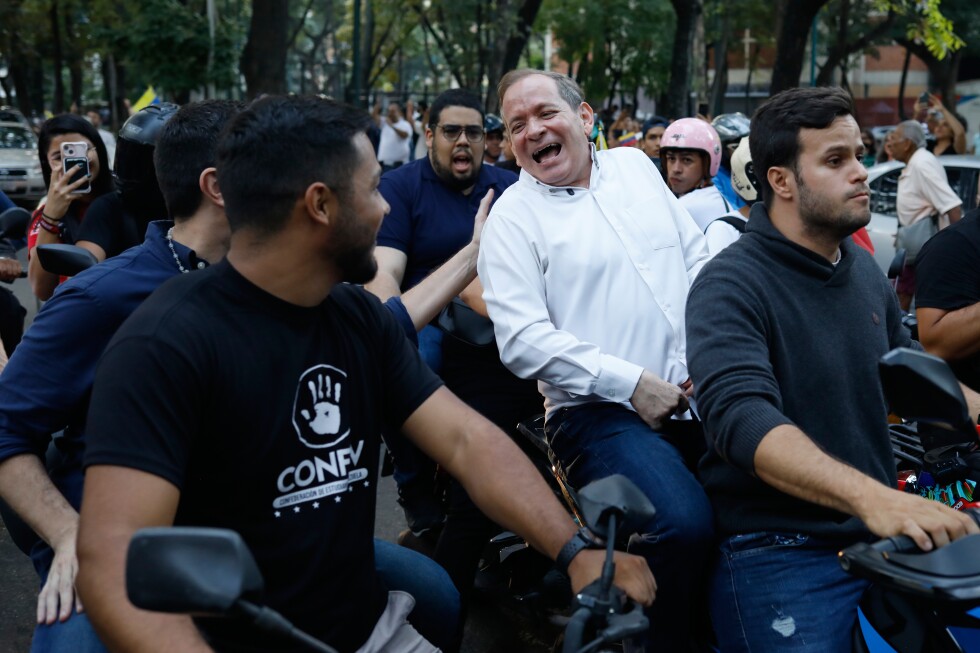
CARACAS, Venezuela — In a significant political development, the Venezuelan administration under Acting President Delcy Rodríguez has commenced the release of numerous high-profile opposition figures from detention facilities. This move follows intense international scrutiny and domestic demands for the liberation of individuals incarcerated for their political affiliations.
Among those freed is Juan Pablo Guanipa, a key ally of Nobel Peace Prize laureate Maria Corina Machado and former state governor, who had been held for over eight months. His release was confirmed via a social media video where he stated, ‘Today, we are being released… Much to discuss about the present and future of Venezuela, always with the truth at the forefront.’
The prisoner rights organization Foro Penal verified that at least 30 individuals were released on Sunday. The group included Maria Oropeza, whose dramatic arrest by military intelligence officers was livestreamed when authorities forcibly entered her residence, and Perkins Rocha, Machado’s legal representative.
These releases occur amidst growing pressure on Rodríguez’s government, which assumed power following the capture of former President Nicolás Maduro by U.S. military forces last month. The administration had previously announced on January 8 its intention to free a substantial number of prisoners—a key demand from opposition groups and human rights organizations backed by international supporters.
The political landscape shows tentative signs of change as the ruling party-controlled National Assembly debates an amnesty bill that could potentially lead to hundreds more prisoner releases. This legislative development has been met with cautious optimism from opposition parties and NGOs, though they continue to demand greater transparency regarding the proposal’s specifics.
The United Nations High Commissioner for Human Rights has engaged with Venezuelan authorities, with spokesperson Ravina Shamdasani confirming that Commissioner Volker Türk had offered support ‘to help Venezuela work on a roadmap for dialogue and reconciliation in which human rights should be at the centre.’
Guanipa’s initial detention in late May had been justified by Interior Minister Diosdado Cabello through allegations of involvement in ‘terrorist group’ activities aimed at disrupting legislative elections—accusations vehemently denied by his brother Tomás, who characterized the imprisonment as political persecution.
As the government moves forward with its prisoner release initiative, National Assembly President Jorge Rodríguez has publicly committed to completing the process by next week following the anticipated approval of the amnesty legislation.