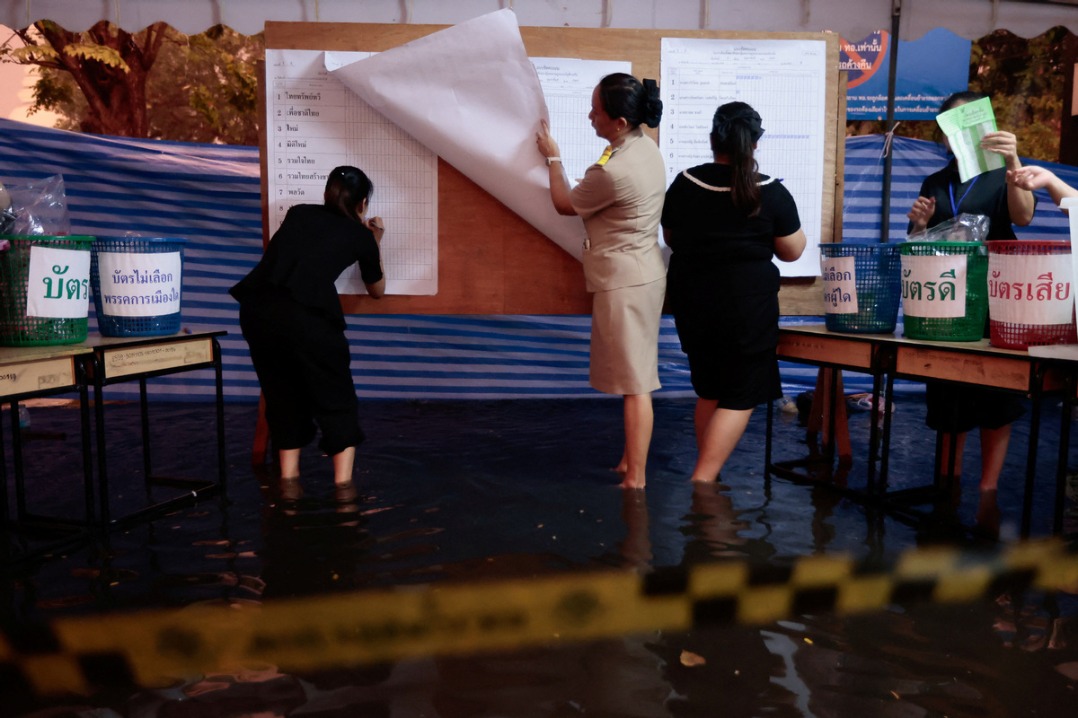
Thailand concluded a critical general election on Sunday, February 8, 2026, with millions of citizens participating in a nationwide vote that will shape the country’s political trajectory after prolonged instability. The electoral process unfolded smoothly despite challenging conditions, including flooding in some areas of Bangkok where officials diligently counted ballots under temporary shelters.
This electoral contest featured an expansive field of 57 political parties vying for parliamentary influence, with 43 parties putting forward 93 candidates for the prime ministerial position. The political landscape has evolved into a three-way competition between incumbent Prime Minister Anutin Charnvirakul’s Bhumjaithai Party, the progressive People’s Party led by 38-year-old Natthaphong Ruengpanyawut, and the Shinawatra family-backed Pheu Thai Party.
The electoral mechanism employed a mixed system where voters cast separate ballots for constituency representatives and party-list members of parliament. The resulting 500-member parliament will exclusively determine Thailand’s next prime minister in April, requiring candidates to secure at least 251 votes without Senate participation following the expiration of transitional constitutional provisions.
Significant security measures accompanied the election, with over 126,000 police officers deployed to safeguard 99,538 polling stations nationwide. Bangkok, as the most valuable electoral battleground with 33 parliamentary seats representing approximately 5.4 million residents, received particular attention with 97,000 officials ensuring orderly operations across more than 6,530 polling stations.
Policy distinctions between major parties have become increasingly nuanced. The People’s Party has attracted younger voters with progressive economic proposals including small business loans, a national single-wage formula, and co-payment support programs. Meanwhile, Bhumjaithai has emphasized economic recovery, disaster response, and infrastructure development, including border wall construction amid tensions with Cambodia. Pheu Thai continues to focus on economic revitalization through startup promotion, agricultural profitability, and innovative lottery programs.
Economic analysts express concern about Thailand’s declining attractiveness to international investors, with Kasikorn Bank’s chief economist Burin Adulwattana noting the country risks becoming ‘the forgotten man of Asia’ without immediate policy corrections. The incoming administration faces urgent pressure to implement responsible economic policies and fulfill campaign promises to avoid financial downgrades and maintain governmental stability.
International relations experts note concerning trends in foreign policy positioning. Thammasat University lecturer Pongkwan Sawasdipakdi observed that major parties have adopted increasingly conservative and nationalist stances regarding border issues with Cambodia, potentially creating long-term obstacles for regional cooperation and ASEAN integration.
The Election Commission must certify at least 95 percent of parliamentary seats by April 9, with parliament convening within 15 days thereafter to select leadership and determine the premiership. If coalition negotiations proceed efficiently, Thailand could establish a fully functional government by late May or June, concluding this significant democratic exercise that includes an additional constitutional referendum ballot regarding potential charter reforms.