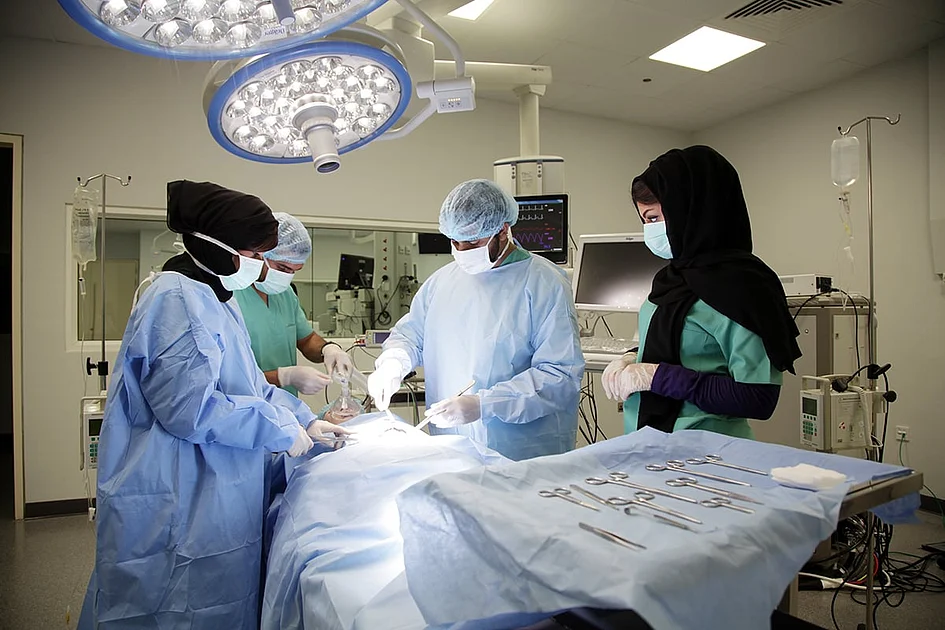
The United Arab Emirates has introduced comprehensive national guidelines to transform clinical education for medical and nursing students nationwide. The Ministry of Higher Education and Scientific Research (MoHESR) has formally adopted the ‘Clinical Training Guidelines,’ creating a unified framework that bridges academic instruction with practical healthcare demands.
This strategic initiative addresses the critical connection between clinical training quality and patient care outcomes. From medical institutions in Sharjah to nursing programs in Abu Dhabi, the guidelines establish consistent standards for practical education, ensuring students develop essential competencies before entering professional healthcare environments.
Ibrahim Fikri, Acting Assistant Undersecretary for the Higher Education and Scientific Research Regulation and Governance Sector, emphasized that the framework “supports efforts to strengthen health education, integrate academic and practical training, and prepare qualified national professionals for the healthcare sector.” The guidelines reflect a commitment to developing an integrated education and healthcare system capable of meeting future national needs.
Dr. Hussain Al Rand, Assistant Undersecretary for the Public Health Sector at the Ministry of Health and Prevention, highlighted that standardized clinical training aligns education with evolving healthcare system requirements. The approach prioritizes “competence, professional responsibility and patient safety,” ultimately enhancing community care quality while building a resilient healthcare workforce prepared to address contemporary and future health challenges.
Healthcare institutions have welcomed the structured framework. Dr. Mohammed Al-Houqani, Secretary General of the National Institute for Health Specialities, described the guidelines as “a pivotal step toward enhancing the quality of practical training across hospitals and healthcare facilities.” The standardized approach ensures structured, high-quality training experiences that strengthen trainees’ professional readiness and enable seamless integration into the healthcare workforce.
The comprehensive framework applies to all undergraduate health programs requiring clinical training under the National Qualifications Framework, excluding postgraduate internships and residencies. Key components include structured clinical experiences with progressive skill development, clear governance defining roles for universities and healthcare facilities, formal partnership agreements between educational institutions and clinical sites, competency-based training progression from observation to hands-on practice, and systematic documentation and assessment mechanisms to monitor student progress and improve outcomes.
This initiative complements recent ministerial resolutions governing student work experience in higher education, establishing unified supervision and monitoring mechanisms across the UAE’s healthcare education landscape.