Pakistani authorities have made significant breakthroughs in the investigation of Friday’s devastating suicide bombing that rocked the capital. Interior Minister Mohsin Naqvi announced the apprehension of four individuals suspected of facilitating the attack that claimed 32 lives and left over 160 injured at a Shia mosque in Islamabad’s Tarlai area.
Among those detained is an Afghan national identified as the alleged mastermind behind the assault. The operation to capture the suspects came at a cost—one counter-terrorism officer lost his life and three others sustained injuries during the raids.
The Islamic State group has formally claimed responsibility for targeting the mosque during Friday prayers, when the building was filled with worshippers. This represents the most lethal attack to hit Pakistan’s capital in more than ten years.
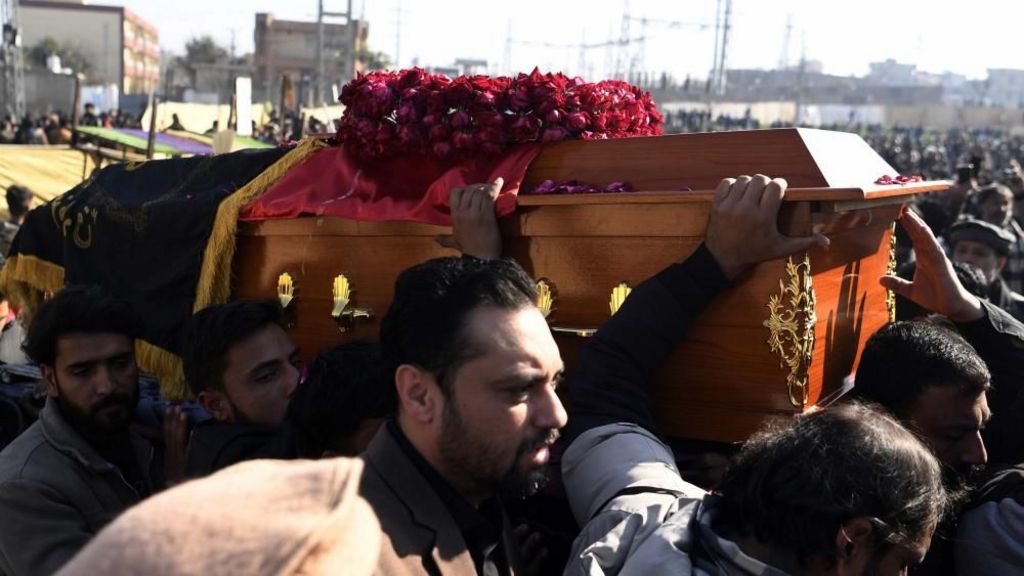
On Saturday, massive crowds gathered under tight security measures to mourn the victims. Funeral proceedings occurred with heightened military presence and police checkpoints throughout key areas of the city.
The human toll was painfully evident as families grappled with their losses. Ashiq Hussain, who lost his 21-year-old nephew Mujtaba Ali, expressed his family’s devastation to Reuters, simply stating they were ‘broken.’
The political response has been swift and multifaceted. While Prime Minister Shehbaz Sharif expressed ‘deep grief’ and President Asif Ali Zardari condemned the targeting of innocent civilians as ‘a crime against humanity,’ the investigation has taken diplomatic turns. Minister Naqvi has accused India of funding the operation and providing targets—allegations firmly rejected by New Delhi as ‘baseless.’
Further complicating regional dynamics, Defense Minister Khawaja Asif suggested Afghan involvement, prompting sharp rebuke from the Taliban government in Kabul, which described the accusations as ‘regrettable’ and lacking ‘credible evidence.’
In response to the security breach, Naqvi has pledged substantial enhancements to Islamabad’s security apparatus, including the recruitment of thousands of new police officers and upgrades to the city’s smart security systems.
The bombing concludes a week of severe violence across Pakistan, including coordinated attacks in Balochistan province that killed 58 civilians—operations claimed by the Balochistan Liberation Army (BLA) rebel group. The military reports having killed over 200 militants in response to these assaults.