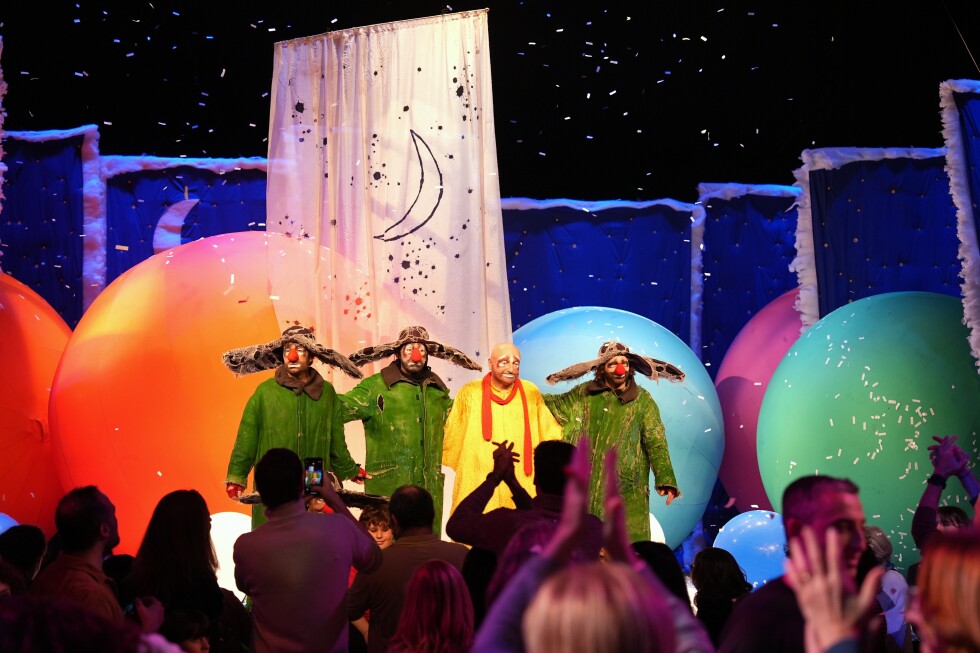
While the Winter Olympics opening ceremony dazzled global audiences with its high-fashion athlete parade and Mariah Carey’s operatic performance, Milan’s unseasonably warm temperatures—hovering near 50°F (10°C)—created an ironic absence of natural snowfall during the winter sports celebration. This meteorological paradox led spectators to seek alternative snowy experiences at an unexpected venue: Slava’s Snowshow at Teatro Strehler.
Russian performance artist Slava Polunin’s acclaimed production, running through the Olympics’ final day on February 22, transforms theaters into winter wonderlands using elaborate paper snowstorms. Since 1993, this wordless spectacle has captivated audiences across 60 countries with its unique blend of visual poetry and physical comedy.
The current Olympic edition features updated improvisational elements reflecting Games atmosphere. During performances, clowns in vibrant green and yellow costumes interact playfully with audiences—swapping belongings, spraying water from umbrellas, and even mimicking phone calls about ongoing Olympic events. A humorous nod to athletic competition emerges when the iconic ‘Chariots of Fire’ theme accompanies slow-motion clown routines.
For Polunin, 75, snow represents profound duality. Born in Siberia, he explains: ‘It can be immensely beautiful and incredibly dangerous.’ This emotional complexity permeates the show through moments like Polunin cradling an empty coat—a gesture simultaneously tender and lonely—amidst the joyful chaos of bouncing giant balloons and paper blizzards.
Audience members like Paola Volpe, attending with children after first experiencing the show 15 years prior, appreciate the production’s timeless magic. Regular attendee Raquele Maggi describes it as ‘a dream… a little like magic’ that transcends language barriers through universal physical storytelling.
The production’s silent narrative format aligns surprisingly with Olympic values of cross-cultural communication, offering spectators an alternative perspective on winter’s essence beyond athletic competition.