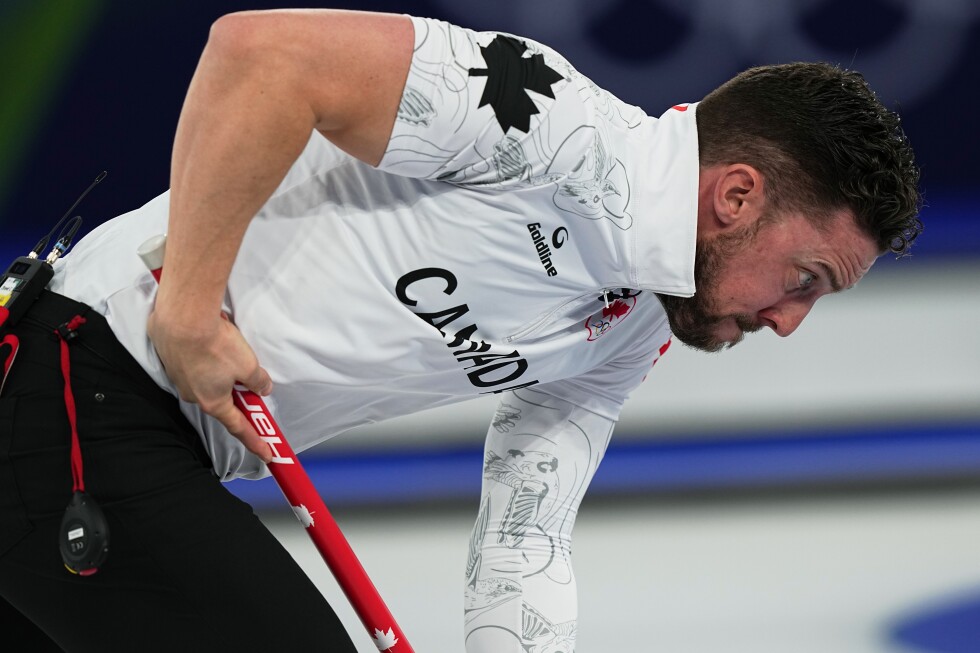
CORTINA D’AMPEZZO, Italy — The Olympic curling arena witnessed a dramatic power shift on Saturday as Great Britain’s Bruce Mouat and Jennifer Dodds delivered a decisive blow to Canadian veterans Brett Gallant and Jocelyn Peterman. The match, characterized by Britain’s aggressive stone placement that systematically dismantled Canada’s strategic formations, represents more than just a round-robin defeat—it symbolizes the complete transformation of international curling competitiveness.
This marked Canada’s second consecutive loss in the mixed doubles tournament, following an earlier defeat by the United States team. The back-to-back setbacks highlight the erosion of Canada’s historical dominance in a sport it once commanded. Olympic observers now recognize that the competitive landscape has undergone fundamental changes through recent Olympic cycles, with multiple nations developing world-class training programs.
Devin Heroux, Canadian Broadcasting Corporation’s seasoned curling analyst, noted: “This outcome perfectly illustrates curling’s current global state. Canada long operated under the assumption that it produced the world’s finest curlers. The reality now is that not only has the international community caught up—they’ve arguably surpassed us.”
Despite these losses, both teams remain likely to advance to the next round alongside the United States and Italy, with Britain now positioned strongly for qualification among the ten teams competing at the 2026 Milan Cortina Games.
The British duo’s victory stems from years of dedicated training at Scotland’s National Curling Academy, established in 2017. Their partnership exemplifies the structured development programs that have produced formidable challengers to Canadian supremacy. Since the 2018 Pyeongchang Games—where Canada failed to medal in either four-person team event—the nation’s curling dominance has waned, managing only a single bronze across all disciplines in Beijing.
Post-match discussions revealed another critical factor: rapidly changing ice conditions at Cortina’s curling center. Athletes noted significant alterations from previous days, with ice playing “up to two seconds faster”—a substantial variation that forced tactical adjustments. Gallant employed an automotive analogy: “It’s like taking a Honda Civic down the highway then jumping into a Ferrari.” He emphasized that while challenging, the conditions didn’t excuse the loss: “The team that adjusts better gains the advantage. They adapted quicker than we did.”
His assessment was echoed by the victorious British pair. “We coped with it very well,” stated Dodds, while Mouat added: “We’re communicating effectively and now understand how the ice will behave for the remainder of the competition.”
Heroux concluded that adaptation to Cortina’s volatile ice conditions would ultimately determine which team claims gold, marking a new era where flexibility and rapid adjustment have become as crucial as traditional curling skills.