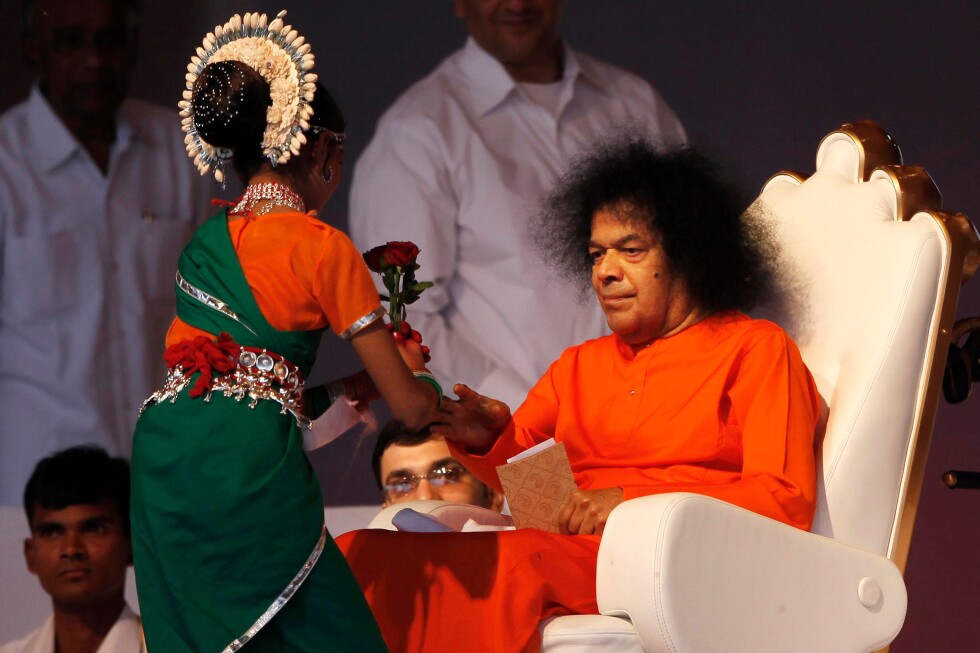
In a nation where 90% of citizens identify as Christian, Venezuela’s political leadership demonstrates a remarkably syncretic approach to spirituality. Both former President Nicolás Maduro and current Acting President Delcy Rodríguez, despite their Catholic upbringing, maintain profound devotion to Sathya Sai Baba, the Indian spiritual leader who passed away in 2011.
This religious pluralism reflects Venezuela’s complex spiritual landscape, where blending multiple faith traditions remains commonplace. For the nation’s leaders, this synthesis incorporates Sai Baba’s teachings emphasizing universal love, spiritual unity, and transcendence of social barriers—a philosophy that has attracted global followers for over half a century.
Maduro frequently framed his government’s challenges as spiritual battles during his presidency, invoking Christian imagery while simultaneously honoring the Indian guru. Weeks before his dramatic capture by U.S. forces on January 3, he celebrated Sai Baba’s centenary on social media, expressing hope that the teacher’s wisdom would guide Venezuela toward becoming “a homeland of love, peace and high spirituality.”
Rodríguez’s spiritual connection appears equally profound. During her 2024 visit to Sai Baba’s ashram in Andhra Pradesh, India—her second pilgrimage in as many years—she described sensing the guru’s protective presence during times of personal and national crisis. “Many times, when I was in danger, I felt Baba with me,” she revealed in a 2023 interview.
The leadership’s devotion manifests visibly in government spaces. Multiple reports confirm Maduro displayed a large, framed photograph of Sai Baba in his Miraflores Palace office alongside portraits of Simón Bolívar and Hugo Chávez—a symbolic trinity representing spiritual, historical, and political guidance.
Sai Baba’s organization established roots in Venezuela decades before current political affiliations, opening Latin America’s first center in Caracas in 1974. Today, the movement maintains significant influence with an estimated 200,000 Venezuelan followers and operates a “Human Values School” in Táchira state.
Academic experts note that such spiritual syncretism reflects Venezuela’s distinctive religious ecology. Professor Andrew Chesnut of Virginia Commonwealth University observes that while Catholicism remains dominant, it comfortably coexists with evangelical Protestantism, Afro-Indigenous traditions, and transnational figures like Sai Baba without requiring exclusive allegiance.
However, the political embrace of Sai Baba comes with complexities. The guru, while revered by millions worldwide for his message of universal love and charitable works, faced persistent allegations of fraud and sexual abuse during his lifetime—accusations his followers dismiss as slander.
The Venezuelan leadership’s spiritual practices appear primarily rhetorical rather than policy-directing, according to analysts. Chesnut suggests engagements with figures like Sai Baba “carry symbolic and performative weight rather than serving as drivers of political ideology or decision-making” in Venezuela’s complex political landscape.