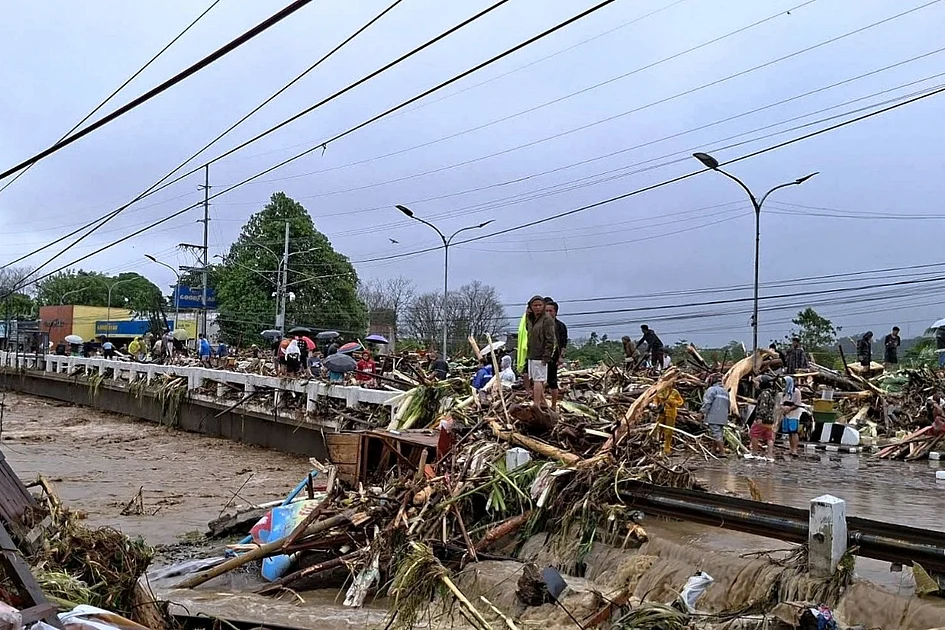
Northern Mindanao in the Philippines has been struck by devastating floods and lethal landslides triggered by Typhoon Penha, internationally recognized while locally named Basyang. This catastrophic event marks the nation’s first major disaster of the year, resulting in five confirmed fatalities and multiple injuries according to the Philippine Office of Civil Defense (OCD).
A particularly tragic incident occurred in Barangay Agusan, where a rain-induced landslide near a quarry site completely buried a family of four, killing all members. Three additional individuals sustained injuries from falling debris in a neighboring municipality, as confirmed by OCD spokesperson Junie Castillo.
The storm’s impact extended severely to Iligan City, where widespread flooding submerged residential areas under water and coated extensive urban sections with thick mud. The calamity claimed the life of local radio broadcaster Creselyn Baterna Velasco, who suffered cardiac arrest after floodwaters invaded her apartment. Emergency response teams worked continuously through Thursday night executing rescue operations for residents trapped by the overflowing Tubod River.
Official statistics reveal the typhoon has displaced approximately 21,000 individuals across northeastern and northern Mindanao, with 6,384 families currently sheltering in activated evacuation centers. Disaster management authorities established 197 emergency shelters, including 32 facilities utilized for preemptive evacuations prior to the storm’s arrival. Overall impact assessments indicate approximately 100,375 people across 27,572 families have been affected, including communities in the Visayas region and Bacolod City on Negros Island.
The typhoon initially caused significant power disruptions across 28 areas, though utility providers successfully restored electricity to all affected locations by Saturday morning. The Philippines typically experiences 20-25 tropical cyclones annually, with scientific evidence indicating these weather systems are growing progressively more destructive due to climate change effects.