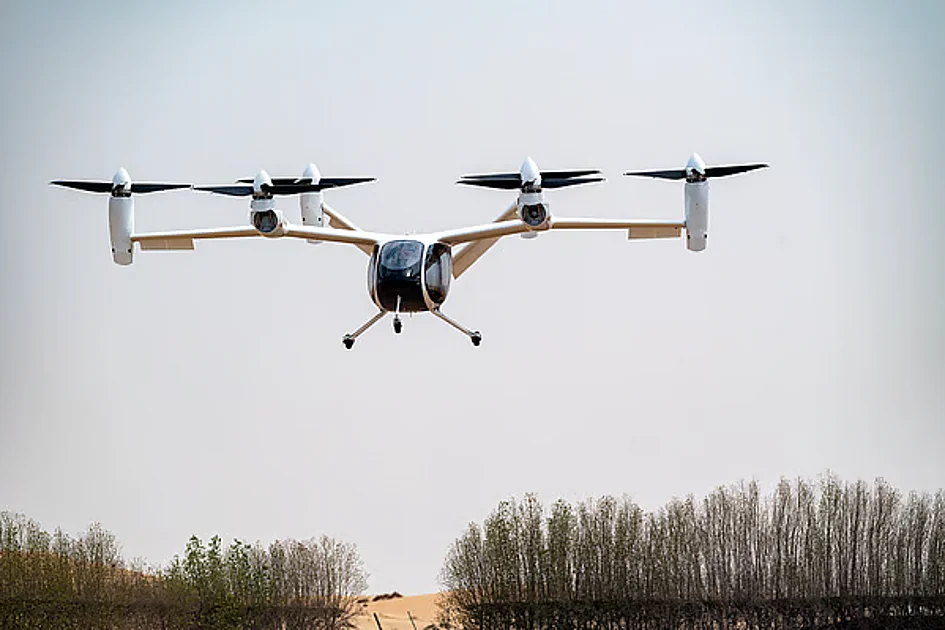
The United Arab Emirates is positioning itself at the forefront of transportation innovation, establishing what industry leaders describe as an ideal testing environment for next-generation mobility solutions. With electric air taxis scheduled for deployment later this year, the nation’s unique regulatory landscape and safety-focused approach are creating what experts call a “sandbox” for autonomous transportation development.
At the recent World Government Summit 2026, mobility pioneers highlighted the UAE’s strategic advantages. Joeben Bevirt, CEO of Joby Aviation, announced plans to launch piloted electric air taxi services in 2026, followed by progressive implementation of autonomous capabilities. “The UAE presents an incredible opportunity as an early adopter environment,” Bevirt noted, emphasizing the region’s limited general aviation traffic compared to the United States, which reduces complexity for testing emerging technologies.
The autonomous revolution extends beyond aviation. Daniil Shuleyko, CEO of Yango Group, praised the UAE’s methodical approach to implementing ground-based autonomous systems through controlled district deployments. This incremental strategy allows for careful scaling from initial pilot programs to broader implementation based on demonstrated success and safety performance.
Despite rapid advancements in artificial intelligence, both executives emphasized the continued critical role of human oversight. “The most crucial component of any autonomous system remains human judgment,” Shuleyko stated. Bevirt concurred, noting that autonomy functions most effectively when humans provide supervision for exceptional circumstances, mirroring current aviation practices.
Public acceptance represents a significant challenge as autonomous systems scale. Yango’s approach includes anthropomorphic design elements—such as eye-like lights and voice capabilities—to foster public comfort with robotic systems. “It’s easy to embrace the first few robots,” Shuleyko observed, “but public perception becomes more challenging at scale.”
Mattar Al Tayer, Director General of Dubai’s Roads and Transport Authority, outlined the emirate’s comprehensive smart mobility vision during the summit. Dubai’s autonomous transportation initiative, dating to 2016, targets converting 25% of all transportation to autonomous operation by 2030. The program initially involves 100 autonomous vehicles with plans to expand to 1,000 units rapidly.
Al Tayer identified multiple factors driving this transformation, including climate change mitigation through zero-emission vehicles, AI-optimized traffic infrastructure, and urban redesign initiatives. “Dubai isn’t merely responding to transportation evolution,” he declared, “we are actively leading this transformative movement while focusing on making mobility more efficient, safe, and sustainable for our residents.”