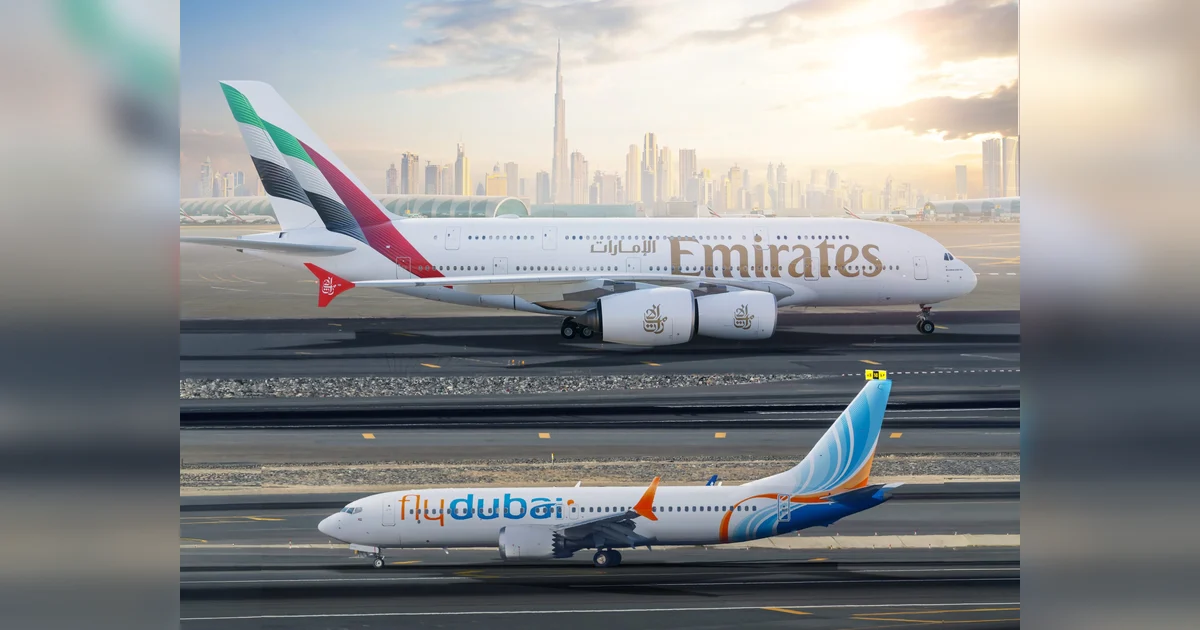
Dubai International Airport (DXB) has solidified its status as the world’s premier international aviation hub, demonstrating remarkable growth momentum that continues to outpace global competitors. According to newly released 2026 data, DXB handled an unprecedented 62.4 million international seats in 2025, extending its lead over London Heathrow by 13.5 million seats and establishing a commanding position in global air travel.
The airport’s capacity has surged 4% year-on-year and stands 16% above pre-pandemic 2019 levels, with projections indicating 96 million passengers in 2026 and a breakthrough to 100 million by early 2027. Aviation analysts from OAG Aviation Worldwide confirm DXB’s sustained growth trajectory positions it to overtake Atlanta’s Hartsfield-Jackson Airport (ATL) as the world’s busiest airport overall within the next 3-4 years.
Strategic drivers behind this expansion include the aggressive network growth of home carriers Emirates and flydubai, both of which have placed substantial aircraft orders to support continued expansion. Emirates’ product investments across its A380, 777, and new A350 fleets have contributed to its status as the world’s most profitable airline, while flydubai’s expansion has bolstered DXB’s connectivity.
DXB’s strategic geographical location enables comprehensive coverage across Europe, Asia, Africa, and the Americas through an extensive ultra-long-haul network. The airport benefits from robust winter tourism from Europe and South Asia alongside resilient business travel demand.
The economic impact of Dubai’s aviation success is profound, with the sector contributing approximately one-third of the emirate’s GDP. Record passenger flows stimulate demand across hospitality, tourism, retail, and transportation sectors, with peak periods exceeding 300,000 daily passengers creating substantial ripple effects throughout the local economy.
Despite operating near capacity, DXB continues investing in technological advancements and operational systems to ensure smoother passenger transit and minimize delays. Looking ahead, the planned 2032 opening of Dubai World Central/Al Maktoum International will provide critical additional capacity, with DXB expected to surpass 110 million passengers by 2030 within its current 120-125 million passenger capacity.
Regional aviation markets also show strength, with Doha Hamad International Airport maintaining a top-10 global position with 32.7 million international seats—20% above 2019 levels. Industry experts note that while geopolitical tensions present potential challenges to international travel, Dubai’s strategic location provides alternative routing options that minimize disruption risks.