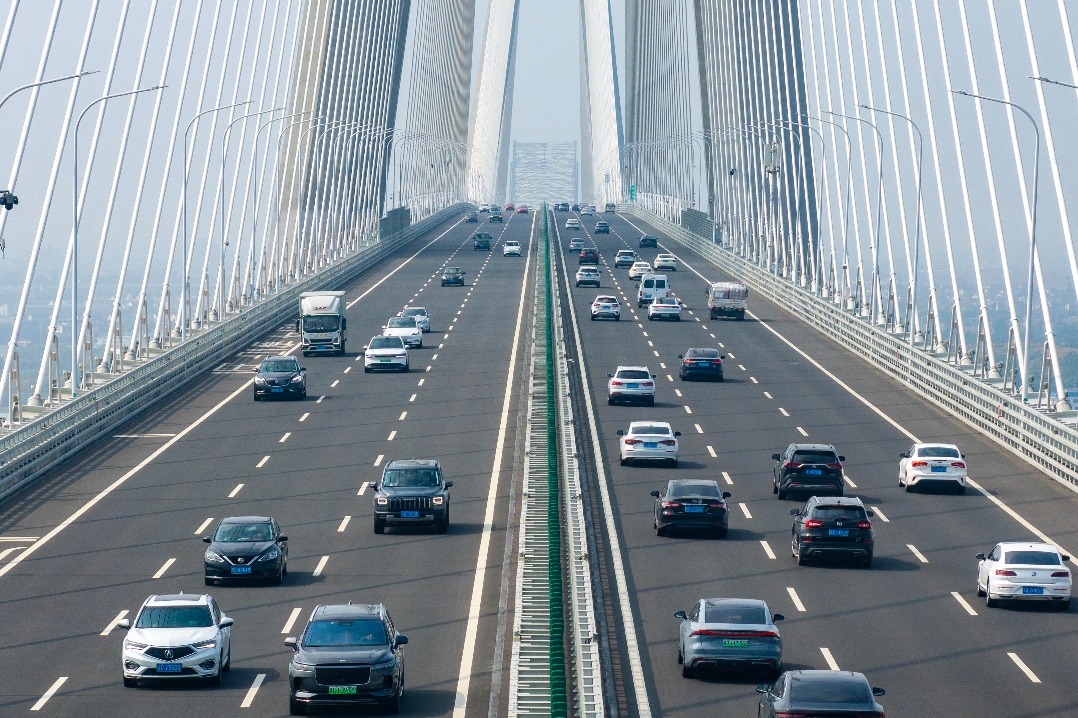
China’s annual Spring Festival migration is witnessing a transformative shift as millions of new energy vehicle (NEV) owners embrace electric road trips home, signaling a monumental change in the world’s largest human migration event.
Wu Yang represents the new wave of travelers opting for NEVs instead of traditional transport. His 1,200-kilometer journey from Shanghai to rural Hubei province demonstrates the practical advantages: significant cost savings exceeding 1,300 yuan for a family of four, plus the freedom to transport gifts and utilize in-car amenities like refrigerators and entertainment systems that transform the journey into a mobile family gathering.
The dramatic rise in NEV adoption during Chunyun—the 40-day travel period expecting record 9.5 billion inter-regional trips—reflects China’s rapid electric mobility transition. Official data reveals China’s NEV fleet reached 43.97 million by end-2025, with 13 million new registrations comprising nearly half of all new car sales.
Technological advancements have been crucial in overcoming range anxiety. Chinese-made electric vehicles now average nearly 500 kilometers per charge with charging speeds improved threefold over five years. Winter travel challenges are addressed through innovations like PTC heaters from companies like Xiaogan Huagong Gaoli Electronics, which protect battery performance in freezing conditions.
Infrastructure expansion has been equally impressive. By December 2025, China deployed over 20 million charging units, with 98% of service areas equipped and 19 provincial regions achieving complete township coverage. This constitutes the world’s largest charging network, capable of supporting over 40 million NEVs.
The Ministry of Transport has implemented tailored solutions for high-traffic areas during the travel rush, including expanded charging spaces and high-power stations. This infrastructure penetration into rural areas, previously difficult to access via public transport, is simultaneously boosting regional tourism during the nine-day holiday period.
As traveler Li Lei from Henan province confirms: ‘Charging isn’t really a concern anymore, even in rural areas. You can find charging stations almost everywhere.’ This sentiment underscores how technological and infrastructure advancements have transformed electric vehicle travel from a novelty into a practical solution for China’s most important annual migration.