China presents a fascinating economic paradox where two seemingly contradictory narratives coexist: while the nation’s overall economic growth shows significant deceleration, its export sector is simultaneously gaining formidable competitive strength globally. This apparent contradiction stems from China’s unique development model—built upon substantial investment, restrained household consumption, and assertive industrial policy—which continues to drive export competitiveness even as domestic growth plateaus.
As China’s traditional growth engines lose momentum, Beijing is increasingly relying on exports and industrial advancement to maintain economic stability. This strategic shift creates immediate challenges for South Korea, which now faces not only reduced Chinese purchasing but also intensified competition in critical product categories where Korean industries traditionally dominated.
The comparison between China and South Korea’s development models reveals both parallels and critical distinctions. Both nations achieved rapid GDP expansion through close state-business collaboration, industrial policy targeting high-value sectors, and high savings rates with controlled wages. However, China’s macroeconomic imbalances have reached far greater proportions than South Korea’s ever did, compounded by China’s massive scale—where provincial governments implement central directives through targeted performance indicators.
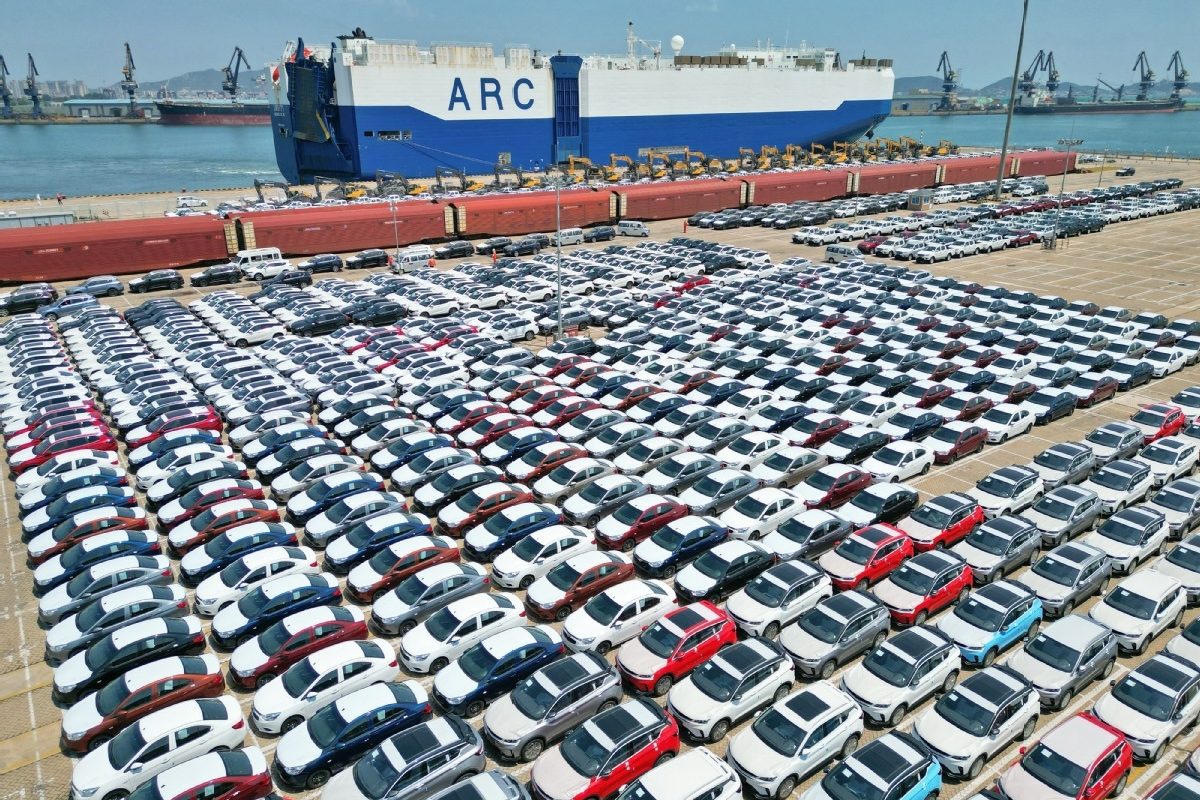
China’s historical growth strategy, effective during its infrastructure development phase, now shows diminishing returns with rising unproductive investment and soaring debt. Rather than addressing weak consumption through politically challenging income redistribution, Beijing is exporting its excess capacity abroad—directly competing with Korean firms in automobiles, petrochemicals, and semiconductors.
Despite identifying domestic consumption as its top priority for 2025-2026, China has yet to confront the fundamental issue: Chinese households consume little not because they save excessively, but because they earn too little. With household income representing just 44% of national income (compared to 73% in the US), rebalancing will require decades of careful political navigation.
The eventual rebalancing toward consumption would benefit China, South Korea, and the global economy by creating a larger, more open Chinese market while easing competitive pressures. Until then, Seoul may implement temporary measures within WTO frameworks to support affected industries, recognizing that China’s economic health ultimately depends on this necessary transition.