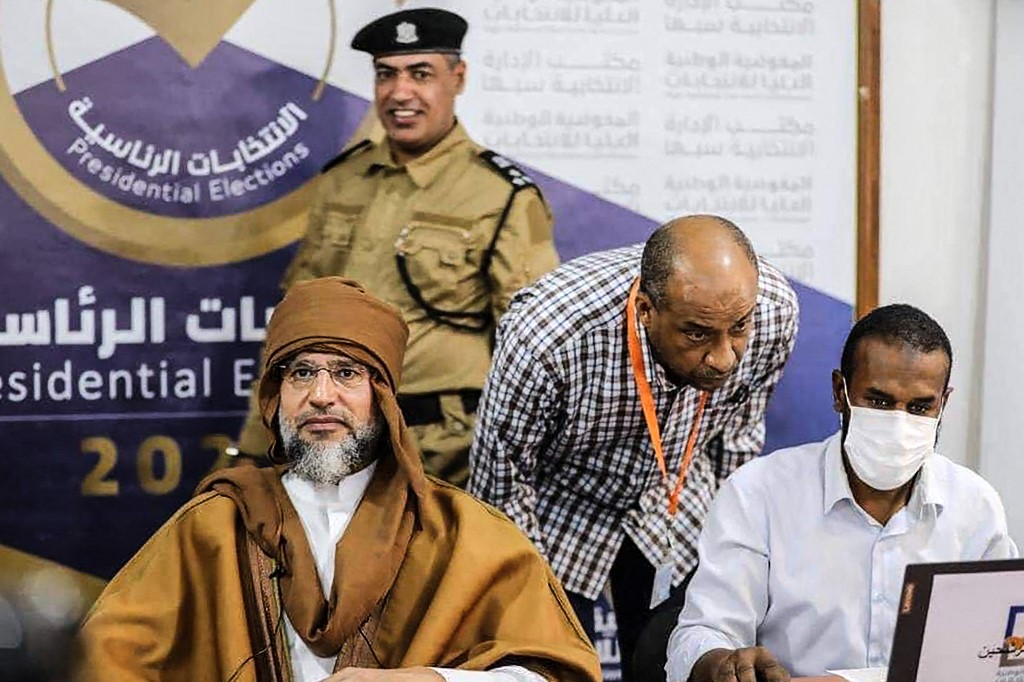
The confirmed assassination of Saif al-Islam Gaddafi, son of the late Libyan leader Muammar Gaddafi and his designated successor, has ignited widespread agitation across Libyan social media and raised profound questions about the nation’s political future. Libya’s attorney general officially confirmed the killing in the early hours of Wednesday, following hours of intense speculation and the subsequent circulation of graphic images showing Gaddafi’s lifeless body in a desert area.
According to political advisers close to the former heir apparent, the operation was conducted by a four-man commando unit that breached his residence, disabled security systems, and executed him during a direct confrontation. The incident occurred in the Zintan region, approximately 100 kilometers south of Tripoli, where Saif al-Islam had been detained following the 2011 revolution that overthrew his father’s regime.
Saif al-Islam, born in 1972, stood apart from his siblings as the only member of the Gaddafi family to play a significant political role during the Jamahiriya era. Educated with a PhD from the London School of Economics, he positioned himself as a reformist and operated through the Gaddafi International Charity and Development Foundation, which served as an instrument of parallel diplomacy to counter his father’s pariah status in Western nations.
Despite being subject to an International Criminal Court arrest warrant for crimes against humanity during the 2011 uprising, and subsequent psychological trauma from his imprisonment, Saif al-Islam had announced intentions to contest the presidential election originally scheduled for 2021. His potential candidacy, which reportedly garnered substantial popular support, was among the factors that led to the election’s cancellation.
The United Nations Support Mission in Libya has strongly condemned what it described as a ‘targeted killing,’ while the attorney general’s office has opened an investigation. However, many analysts express skepticism about the prospect of accountability, given Libya’s entrenched culture of impunity regarding political assassinations.
The assassination has exposed the deep divisions within Libyan society. While segments of the population, particularly in historic Gaddafi strongholds like Sirte, have openly mourned his death, his existence had long represented a political embarrassment for most armed factions. His strategy of positioning himself outside the two dominant power structures—Prime Minister Abdul Hamid Dbeibah’s internationally recognized government in Tripoli and the Haftar family’s administration in Benghazi—ultimately isolated him from centers of power while appealing to those disillusioned with post-revolutionary elites.
The attribution of responsibility remains intensely contested. Social media speculation initially pointed toward Mahmoud Hamza, commander of the 444 Brigade and a key Dbeibah ally, though his forces promptly denied involvement. Alternative unverified claims suggest possible responsibility from Saddam Haftar, son of eastern commander Khalifa Haftar, while Gaddafi loyalists have even suggested foreign involvement linked to French political scandals involving Libyan financing.
Analysts at the Royal United Services Institute suggest the operation likely resulted from local tensions within Zintan rather than a broader conspiracy. The city has long been characterized by internal divisions between factions aligned with either Tripoli or Benghazi, and Saif al-Islam’s presence under the protection of his own armed brigade had created growing tensions over years.
The elimination of Saif al-Islam removes a central figure from Libya’s political narrative, particularly for pro-Gaddafi elements and non-aligned groups seeking alternatives to the dominant power structures. With all of Muammar Gaddafi’s other children either deceased or exiled, the event leaves pro-Gaddafi sentiments without any symbolic leadership, potentially altering the political calculations of various security actors who had instrumentalized residual sympathy for the former regime.