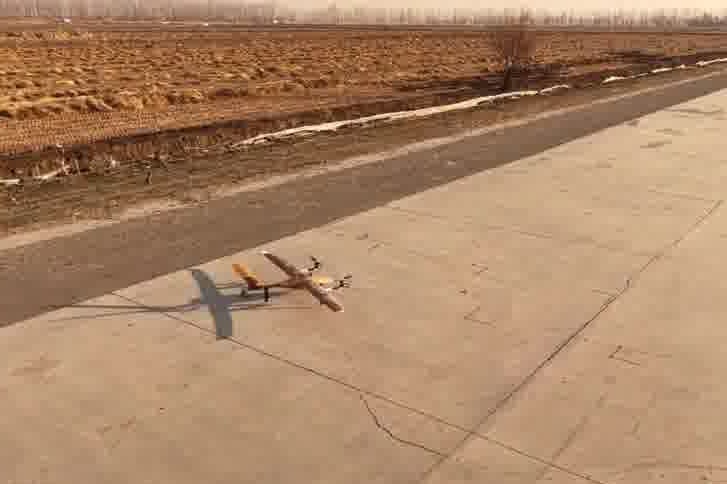
In a groundbreaking development for sustainable aviation technology, a tilt-rotor drone constructed primarily with bamboo-based composite materials has successfully completed its inaugural flight in Tianjin. This achievement represents the world’s first fixed-wing unmanned aerial vehicle to incorporate such a significant proportion of bamboo-derived components, according to the International Centre for Bamboo and Rattan.
The innovative aircraft, developed through a collaborative effort between the International Centre for Bamboo and Rattan, Beihang University’s Ningbo Innovation Research Institute, and Long Bamboo Technology Group, features over 25% of its structural components made from advanced bamboo composites. This milestone demonstrates the viability of environmentally conscious materials in high-performance aviation applications.
Technical specifications reveal a drone with a 2.5-meter wingspan and approximately 7-kilogram weight, capable of vertical takeoff and landing operations. The aircraft achieves cruise speeds exceeding 100 kilometers per hour with an endurance rating of more than one hour per flight cycle.
The bamboo composite technology delivers substantial advantages over conventional materials, reducing overall weight by more than 20% compared to lightweight carbon fiber alternatives while simultaneously cutting material costs significantly. The bamboo-based composite cloth costs approximately one-quarter of standard carbon fiber materials and proves even more economical than specialized aeronautical-grade alternatives.
Project lead researcher Qin Daochun emphasized the technical challenges overcome during development, noting that the research team conducted over 100 experiments adhering to strict airworthiness standards. These efforts resulted in a bamboo composite material exhibiting exceptional strength, toughness, and formability characteristics suitable for aviation applications.
This successful demonstration marks a crucial advancement in China’s expanding low-altitude economy initiatives, potentially establishing new pathways for greener, lighter, and more cost-effective development within the drone industry and broader aviation sector.