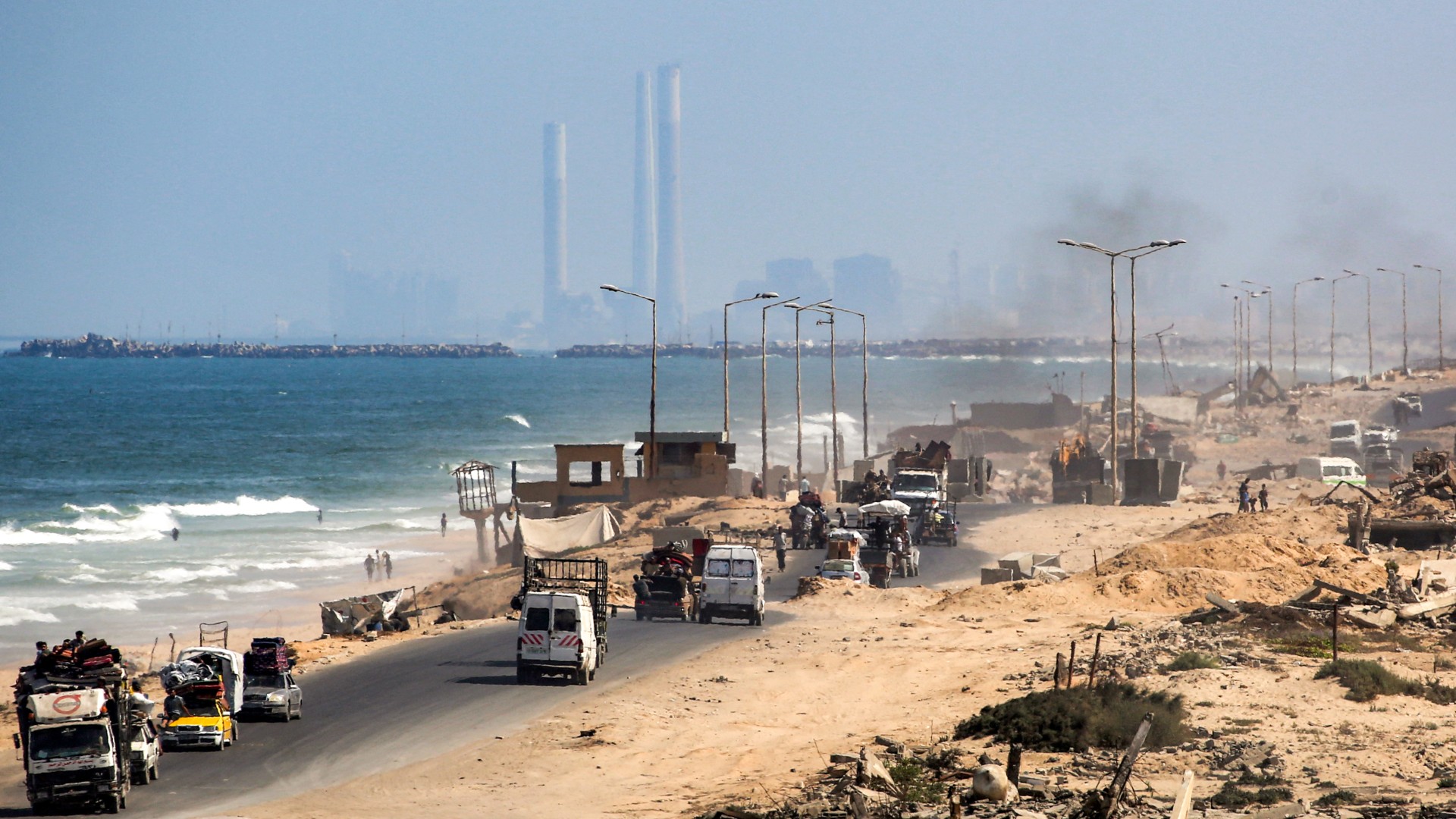
Senior Israeli officials are actively formulating strategies to secure economic advantages from the impending reconstruction of Gaza, as revealed in a recent Haaretz report. High-level discussions between Finance Ministry representatives and military commanders have centered on infrastructure projects that would simultaneously benefit Israel while addressing Gaza’s humanitarian needs.
One prominent proposal involves constructing an Israeli highway network with direct access points to Gaza, financed by nations seeking transit routes through Israeli territory. This plan specifically includes extending the southern Route 232 to improve Palestinian travel connectivity between Gaza and the West Bank.
The energy sector presents another area of potential Israeli involvement. While international donors contemplate building power plants either within Gaza or in neighboring Egypt, Israel is advancing a third alternative: supplying electricity directly from its territory. This approach would require donor countries to fund the expansion of Israel’s Ashkelon power facility near the Gaza border, subsequently enhancing Israel’s own energy capacity.
A dedicated international coordination center in Kiryat Gat has established at least six specialized working groups focusing on Gaza’s reconstruction. These teams—covering stabilization, security, intelligence, humanitarian aid, and engineering—include representatives from 28 nations, with Israeli participation in each committee.
The reconstruction challenge remains monumental, with UN estimates projecting a $70 billion cost over decades following Israel’s bombardment that reduced Gaza’s economy by 87%. The territory’s current GDP per capita stands at a mere $161, among the world’s lowest.
Controversial redevelopment visions have emerged, including Jared Kushner’s proposal to transform Gaza into a free-market hub featuring skyscrapers and commercial districts. Critics have condemned this approach as cultural erasure and profit-seeking from humanitarian catastrophe. Meanwhile, practical steps are underway, with UAE-funded construction approved for a new neighborhood in Rafah to house approximately 25,000 residents.