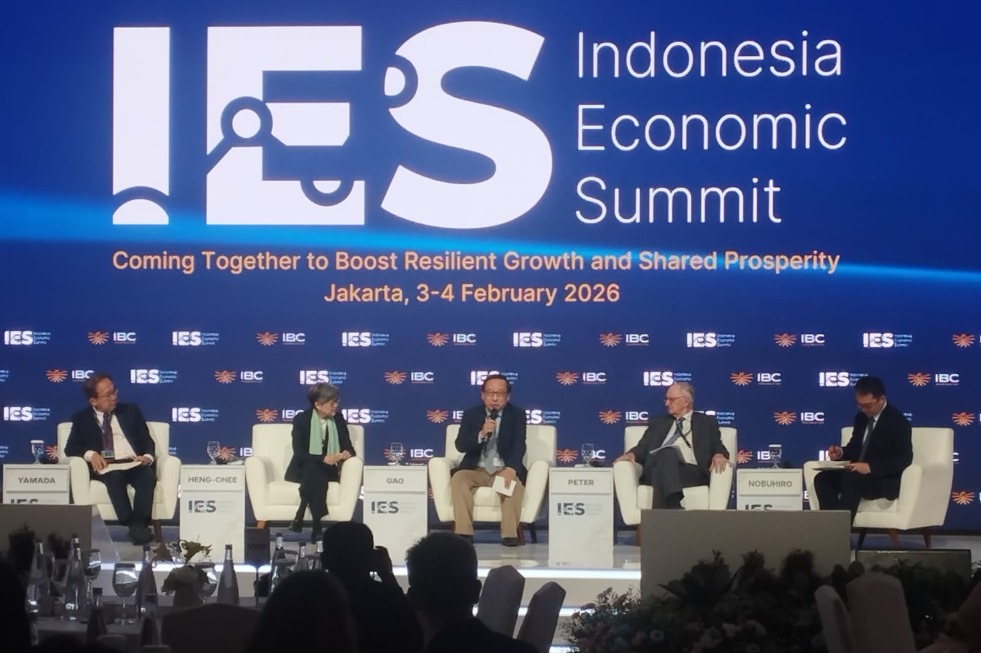
At the Indonesia Economic Summit 2026 in Jakarta, a powerful consensus emerged among Asia-Pacific leaders: Southeast Asian nations must pursue deeper regional integration to navigate an increasingly complex global landscape. The two-day forum, themed ‘Coming Together to Boost Resilience Growth and Shared Prosperity’, brought together government officials, corporate executives, and academics to address shifting economic paradigms.
Indonesia’s Economy Coordinating Minister Airlangga Hartarto set the tone by observing that contemporary global relations are now ‘based on realism’ rather than ideological divisions. Highlighting this transformation, Hartarto noted that recent World Economic Forum discussions in Davos had unusually focused on conflict rather than technological innovation—a significant departure from previous years.
The minister emphasized the critical need for middle powers like Indonesia to strategically balance relationships with major powers amid geopolitical changes. Indonesia is currently negotiating trade and economic agreements with multiple partners including Canada, the European Union, Singapore, the United Kingdom, and the United States.
ASEAN’s remarkable economic trajectory was highlighted as a model of regional cooperation. Teh Kok Peng, Chairman of East Asian Institute at National University of Singapore, stressed that ‘the more you get into the world of globalization, the more ASEAN needs to create scale.’ He specifically advocated for collaboration with China, Japan, and South Korea on developing the ASEAN Power Grid to enhance regional energy security.
Arsjad Rasjid, Chairperson of the Indonesian Business Council’s board of trustees, emphasized translating diplomatic capital into tangible economic benefits. He pointed to China—Indonesia’s largest trading partner—as a valuable source of development lessons, particularly in food and energy resilience.
The forum also featured international perspectives, with Victor Gao of the Center for China and Globalization praising Indonesia’s multilateral cooperation across the Arab world, China, Japan, Australia, and India. Meanwhile, Saudi representative Abdullah Saleh Kamel discussed Saudi Vision 2030’s market liberalization as evidence of growing international economic integration opportunities.
Former Indonesian minister Bambang Brodjonegoro projected China’s emerging leadership role in Asia’s economic future, noting that ‘Asia needs China as it is moving toward high-income status.’ The collective message underscored that regional cooperation and strategic partnerships remain essential for sustainable growth in an era of geopolitical uncertainty.