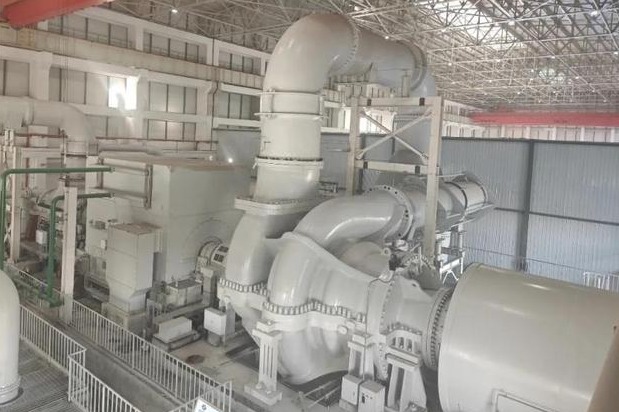
Chinese researchers have achieved a monumental advancement in energy storage technology with the development of the world’s most powerful compressed air energy storage (CAES) compressor. This engineering milestone was jointly accomplished by the Institute of Engineering Thermophysics under the Chinese Academy of Sciences and Zhong Chu Guo Neng (Beijing) Technology Co., Ltd., marking a significant leap forward in renewable energy infrastructure.
The groundbreaking compressor represents the core component of CAES systems, which function by storing compressed air in underground caverns during periods of low electricity demand. When energy requirements peak, this pressurized air is released to drive turbines and generate electricity, effectively serving as a massive mechanical battery for power grids.
Technical specifications reveal extraordinary performance metrics: the system achieves a maximum discharge pressure of 10.1 megapascals with a peak power output of 101 megawatts. Demonstrating remarkable operational flexibility, the compressor maintains efficiency across an extensive load range from 38.7 percent to 118.4 percent, while reaching 88.1 percent efficiency at maximum discharge pressure – establishing new global benchmarks for energy conversion performance.
This technological breakthrough represents more than a doubling of power output compared to existing CAES compressors while simultaneously reducing unit costs. The system’s distinctive advantages include unprecedented efficiency levels, exceptional high-pressure capabilities, and an unusually broad operational range that enhances grid stability.
China’s strategic investment in advanced energy storage solutions addresses critical challenges in renewable energy integration. As the nation accelerates its transition toward sustainable power sources, CAES technology provides essential infrastructure to mitigate the intermittent nature of solar and wind power generation. This development enables more effective management of supply-demand imbalances while facilitating higher penetration of renewable energy into national power grids without compromising reliability.