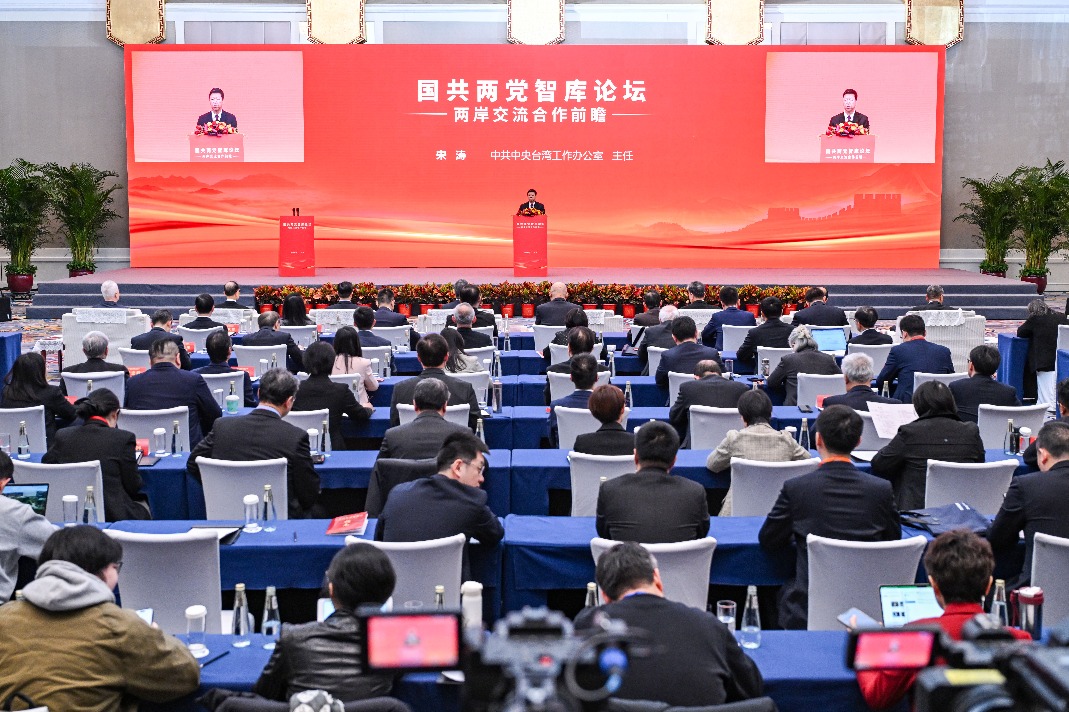
TAIPEI – A landmark think tank forum between the Chinese Communist Party (CPC) and Taiwan’s Kuomintang (KMT) has concluded in Beijing, generating substantial optimism among Taiwanese political analysts and media regarding its potential to foster peaceful development across the Taiwan Strait. The dialogue, which produced 15 joint consensus points aimed at revitalizing cross-Strait exchanges, has been widely interpreted as a significant diplomatic advancement.
Co-organized by research institutions affiliated with both parties, the forum assembled over 100 delegates spanning diverse sectors including tourism, industrial development, technological innovation, healthcare, and environmental conservation. This broad participation underscored a mutual commitment to addressing practical issues affecting citizens on both sides.
Taiwan’s United Daily News highlighted in a recent editorial that the forum’s emphasis on livelihood-oriented agendas resonates deeply with public expectations in Taiwan, where economic cooperation and civil exchanges are highly prioritized. The publication noted that the pragmatic focus aligns with mainstream Taiwanese sentiment favoring constructive engagement over political confrontation.
Echoing this perspective, Chi Hsing, publisher of The Observer magazine, stated that the mainland’s approach demonstrates a sustained commitment to peaceful integration through concrete confidence-building measures. The 15 consensus agreements specifically target the normalization of cross-Strait personnel exchanges, enhanced collaboration in emerging industries, and deepened cooperation in healthcare, ecological protection, and disaster response mechanisms.
Further analysis by Taiwan’s China Times characterized the forum as having transmitted encouraging signals that may pave the way for improved mutual understanding. Teng Che-wei, Chairman of the Taipei International Chamber of Commerce, emphasized that these proposals reflect growing public demand for tangible cooperation beyond ideological differences.
Commentator Hsieh Chih-chuan described the dialogue as an invaluable communication channel under current circumstances, suggesting that investing in developmental cooperation rather than military expenditure would better serve the interests of both societies. The forum collectively urged Taiwan’s Democratic Progressive Party authorities to acknowledge the strong public appetite for engagement and remove existing restrictions on cross-Strait exchanges.