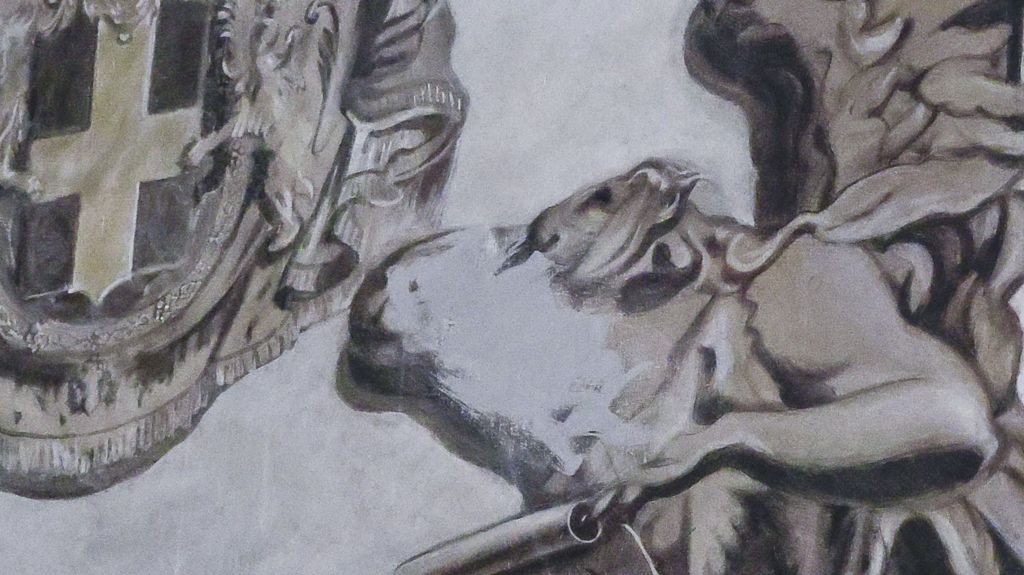
An artistic restoration project at Rome’s Basilica of St Lawrence in Lucina has ignited controversy and prompted Vatican intervention after a restored angelic fresco bore striking resemblance to Italian Prime Minister Giorgia Meloni. The incident began when visitors noticed the freshly repainted cherub’s facial features unmistakably mirrored those of the right-wing leader, sparking widespread attention and debate.
Eighty-three-year-old artist Bruno Valentinetti, who originally created the fresco in 2000 and was commissioned to restore it following water damage, initially denied intentional similarity but later acknowledged the likeness. Valentinetti claimed he received direct instructions from Vatican authorities to obscure the controversial face, which he subsequently executed through crude overpainting that left the angel featureless.
Cardinal Baldassare Reina of Rome issued a strongly worded statement expressing profound disappointment, emphasizing that ‘images of sacred art and Christian tradition cannot be misused or exploited.’ The Diocese of Rome has announced plans to properly restore the artwork to its original iconography following consultation with cultural preservation authorities.
The basilica, located merely five minutes from Meloni’s government office, experienced unusual visitor traffic as curious onlookers sought to photograph the controversial artwork. Reverend Daniele Micheletti, the church’s priest, noted that many visitors came specifically to take selfies rather than for prayer, fundamentally altering the sacred atmosphere of the historic site.
Prime Minister Meloni responded to the controversy with humor on Instagram, posting that she was ‘definitely not like an angel’ accompanied by laughing emojis. Meanwhile, Italy’s cultural heritage protection agency has mandated that any future restoration work must receive official authorization and submit preliminary sketches for approval.
The Baroque-era Basilica of San Lorenzo in Lucina, housing works by masters including Bernini and Reni, now finds its contemporary artwork subject to unprecedented bureaucratic oversight despite the 2000 fresco not holding protected heritage status.