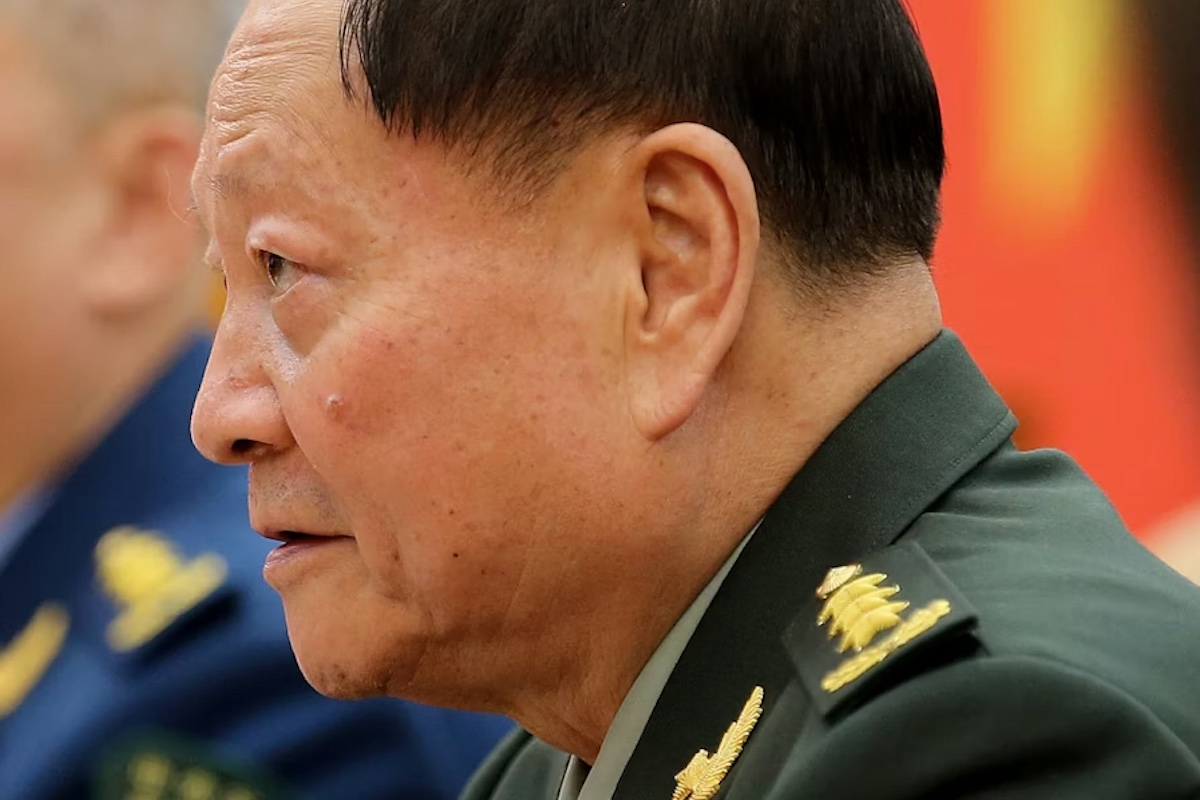
China’s military command structure has undergone another significant transformation with the removal of General Zhang Youxia from his position as Vice Chairman of the Central Military Commission (CMC) on January 23. This development leaves only one of the original seven CMC members appointed three years ago still in office, marking one of the most substantial leadership overhauls in recent Chinese military history.
President Xi Jinping, who chairs the CMC, has demonstrated a consistent pattern of removing senior officials throughout his tenure. This approach dates back to the early 2010s when several high-ranking Party members, including Politburo member Bo Xilai and security chief Zhou Yongkang, were purged under anti-corruption campaigns. The Party’s slogan at the time emphasized that ‘tigers’ (high-ranking officials) were equally vulnerable as ‘flies’ (lower-level officials) in the anti-graft drive.
The recent focus has shifted to the People’s Liberation Army (PLA), which has experienced abrupt personnel changes. The disappearance and subsequent removal of Defense Minister Li Shangfu in mid-2023 preceded the current shakeup. According to the People’s Daily, the official Party newspaper, General Zhang and fellow CMC member Liu Zhenli were formally accused of exacerbating political and corruption issues that threatened Party control over the military.
While speculation about internal power struggles continues, including unverified claims about nuclear secrets and coup attempts, what remains evident is the PLA’s ongoing structural challenges. General Zhang, in his seventies, represented one of the few senior military figures with actual combat experience from the Vietnam War. Despite reported personal connections to Xi through their shared Shaanxi province origins, personal relationships appear secondary to political objectives in China’s highest leadership circles.
The timing of these changes is particularly significant as China faces multiple challenges, including economic pressures, demographic issues, and increasing international uncertainty. The performance of Russian forces in Ukraine has reportedly caused concern among Chinese leadership about their own military’s capabilities, particularly regarding potential operations against Taiwan.
President Xi’s demand for absolute loyalty and battle readiness appears to be driving these personnel decisions. The coming year is expected to bring generational changes throughout China’s leadership structure, with significant implications for the country’s military posture and broader political direction.