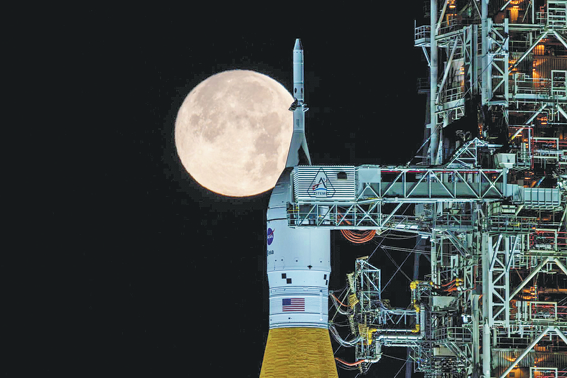
NASA’s ambitious lunar program encountered significant technical challenges during a crucial pre-launch test of its Space Launch System (SLS) rocket on Monday, raising concerns about the timeline for the upcoming crewed mission around the moon. The incident occurred at Kennedy Space Center in Florida during a daylong fueling operation designed to simulate final countdown procedures.
The problematic hydrogen leaks emerged just hours into the complex fueling process, where launch controllers were loading the 98-meter rocket with more than 2.6 million liters of super-chilled hydrogen and oxygen. Excessive hydrogen accumulation near the rocket’s base forced multiple suspensions of the hydrogen loading operation as engineers implemented contingency measures developed during previous SLS testing in 2022.
The four astronauts assigned to the mission—three Americans and one Canadian—monitored the critical rehearsal from Johnson Space Center in Houston, approximately 1,600 kilometers away. The crew has been in quarantine for over a week awaiting the outcome of this essential practice countdown, which will determine when they can embark on humanity’s first lunar voyage in more than fifty years.
NASA now faces a compressed launch window, with the earliest possible launch date pushed to Sunday and a hard deadline of February 11 before the mission must be postponed until March. The agency’s scheduling constraints are further complicated by seasonal cold conditions that have already reduced February’s launch window by two days.
The planned mission involves a nearly 10-day journey that will take astronauts past the moon, around its far side, and directly back to Earth—testing the Orion capsule’s life support systems without entering lunar orbit or attempting a landing. This testing milestone represents a critical step toward NASA’s Artemis program goals of establishing sustainable lunar exploration.