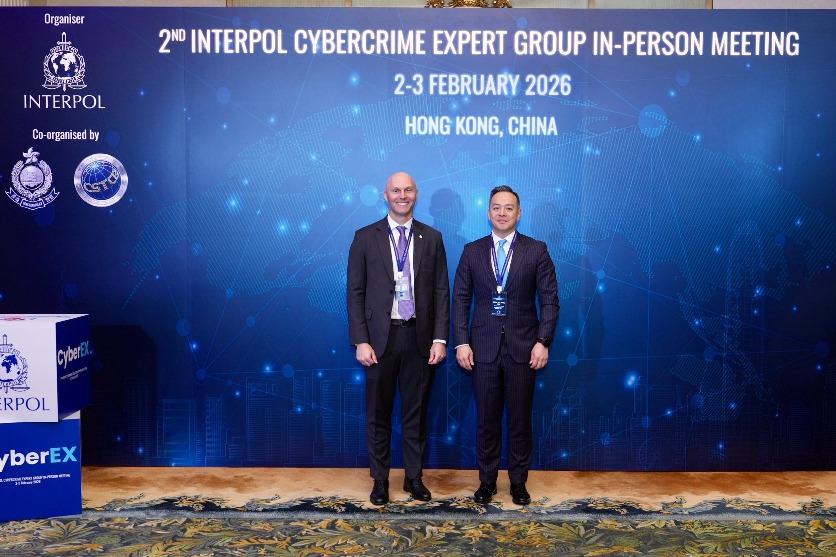
Hong Kong has positioned itself at the forefront of the global fight against cybercrime by hosting the INTERPOL Cybercrime Expert Group’s pivotal annual meeting from February 2-3, 2026. The event brought together an elite assembly of over 120 law enforcement specialists, industry experts, and international organization representatives from more than 30 countries and regions worldwide.
Co-organized by the Hong Kong Police Force (HKPF) and INTERPOL under the strategic theme “Disrupting the Industrialization of Cybercrime,” the two-day summit addressed the increasingly sophisticated nature of digital criminal operations. Hong Kong Police Commissioner Chow Yat-ming inaugurated the proceedings by outlining the city’s multi-faceted approach to cybersecurity challenges.
Commissioner Chow detailed the HKPF’s comprehensive strategy focusing on three critical pillars: developing cutting-edge technological solutions, establishing robust public-private partnerships, and creating an integrated public safety ecosystem. “Our response to cyber threats requires continuous innovation through collaborative platforms, advanced technology initiatives, and active industry participation,” Chow emphasized during his opening address.
The police commissioner further stressed that effective cybercrime combat necessitates enhanced international cooperation, cross-sector alliances, and sustained capacity development across global law enforcement agencies.
INTERPOL’s Cybercrime Director Neal Jetton acknowledged Hong Kong’s strategic role in international policing collaboration, stating the meeting demonstrated the city’s proactive commitment to global security. Jetton expressed optimism that the gathering would yield practical solutions and coordinated actions to effectively dismantle sophisticated cybercriminal networks.
The summit facilitated intensive expert discussions on disrupting the entire cybercrime supply chain, with specialized sessions examining cybercrime ecosystems, digital extortion schemes, artificial intelligence applications in crime prevention, and virtual asset tracing methodologies. Participants engaged in knowledge sharing regarding cross-border intelligence exchange mechanisms, synchronized operational strategies, and professional capacity enhancement programs.