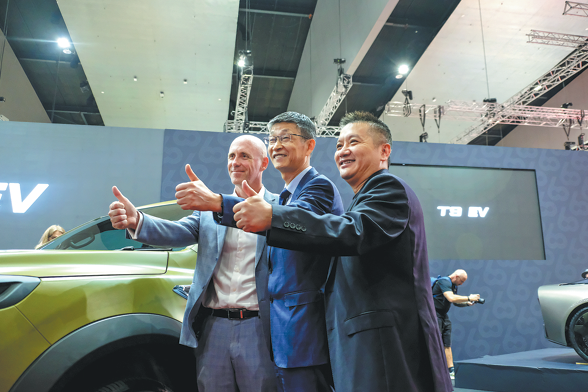
The Australian automotive landscape witnessed a remarkable transformation in 2025 as Chinese manufacturers significantly expanded their footprint, capturing nearly one-fifth of all new vehicle sales according to industry data. The Federal Chamber of Automotive Industries (FCAI), the nation’s premier automotive distribution body, reported that Chinese brands accounted for approximately 18% of total sales, marking a substantial increase from 14% just a year earlier.
This surge occurred within a robust market that exceeded 1.21 million vehicle sales overall. Three Chinese automakers—Great Wall Motor, BYD, and MG—secured positions among Australia’s top ten bestselling brands, with Chery emerging as the fastest-growing marque after recording an extraordinary 176.8% sales growth. The performance solidifies China’s status as Australia’s third-largest vehicle source nation, particularly significant given Australia’s complete reliance on imports since domestic manufacturing ceased in 2017.
The ascendancy of Chinese brands coincides with Australia’s accelerating transition toward electrified transportation. FCAI statistics reveal that battery electric vehicles (BEVs) reached 100,000 units sold (8.3% market share), while plug-in hybrids experienced the most dramatic growth—more than doubling to over 50,000 units with a 130.9% year-on-year increase. Hybrid vehicles also gained substantial traction, with approximately 200,000 units sold representing a 15.3% annual growth.
Peter Griffin, FCAI’s Director of State and Territory Advocacy, attributed this shift to evolving global supply chains and expanding consumer choices: ‘China’s position reflects continued diversification of automotive supply chains and growing product breadth available to Australian consumers across all engine types.’ He noted that Asian manufacturers now supply over 80% of Australia’s new vehicles.
The electric vehicle sector demonstrated particularly strong Chinese representation, with three BYD models ranking among Australia’s top five bestselling EVs during the first half of 2025, collectively exceeding 18,500 units. According to the Electric Vehicle Council, Australia’s national EV fleet has now surpassed 454,000 vehicles.
Julie Delvecchio, CEO of the Electric Vehicle Council, highlighted the consumer appeal of EVs: ‘Australians are choosing EVs in record numbers because these are cheaper to run, cleaner and quieter.’ However, she emphasized that achieving Australia’s 2035 emissions reduction targets would require accelerating EV sales to at least 240,000 vehicles annually.
Industry leaders anticipate continued Chinese brand expansion in the Australian market. Griffin concluded: ‘Australians demand quality vehicles at competitive prices. Thus, we expect Chinese brands to remain an important part of the Australian market in 2026 and into the future, with further growth and new products.’