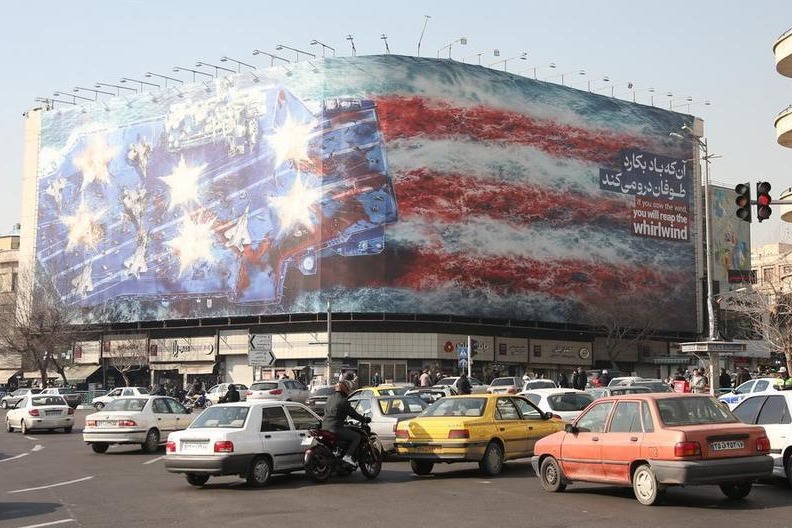
A tense aerial encounter between US and Iranian forces in international waters has cast uncertainty over upcoming diplomatic talks between the longstanding adversaries. The incident occurred Tuesday when a US F-35C fighter jet shot down an Iranian Shahed-139 drone that the US Central Command stated had “aggressively approached” the USS Abraham Lincoln aircraft carrier approximately 800 kilometers from Iran’s coastline.
The US military characterized the engagement as “an act of self-defense” necessitated by the drone’s “unnecessary maneuvering” toward the carrier. No American personnel were injured nor equipment damaged during the confrontation.
Iranian media presented a contrasting narrative, with Fars news agency reporting their drone had successfully completed a “surveillance mission” in international waters, monitoring military movements and transmitting real-time data to ground bases. Simultaneously, Tasnim news agency acknowledged Iran had lost contact with one of its drones, with the cause under investigation.
The aerial confrontation comes amid fragile diplomatic overtures. Iranian President Masoud Pezeshkian announced he had instructed the Foreign Ministry to pursue “fair and equitable” negotiations with the United States, responding to a proposal from US President Donald Trump that regional governments had urged Iran to consider. Pezeshkian emphasized any talks must occur within a framework of “dignity, prudence and expediency.”
Diplomatic preparations face multiple complications. While Turkey has offered mediation services, Iran reportedly prefers Oman as a venue and favors direct bilateral talks rather than a broader format involving Arab and Muslim states. The diplomatic initiative has also drawn resistance from Israel, with Prime Minister Benjamin Netanyahu’s office asserting Iran “has repeatedly demonstrated it cannot be trusted to keep its promises.” Israeli officials are reportedly seeking US assurances of “operational freedom of action” against Iran and pressing for complete cessation of Tehran’s ballistic missile program and uranium enrichment.
Further complicating the diplomatic landscape, Iran faces renewed tensions with the European Union following the bloc’s designation of the Islamic Revolutionary Guard Corps as a terrorist organization. Tehran responded by labeling EU militaries as “terrorist groups” and summoned EU ambassadors to protest the move.
Domestically, Iranian authorities announced the arrest of 139 foreign nationals in Yazd during recent anti-government protests that began in response to currency depreciation but escalated into violent clashes. Tehran has consistently blamed the United States and Israel for instigating the unrest.