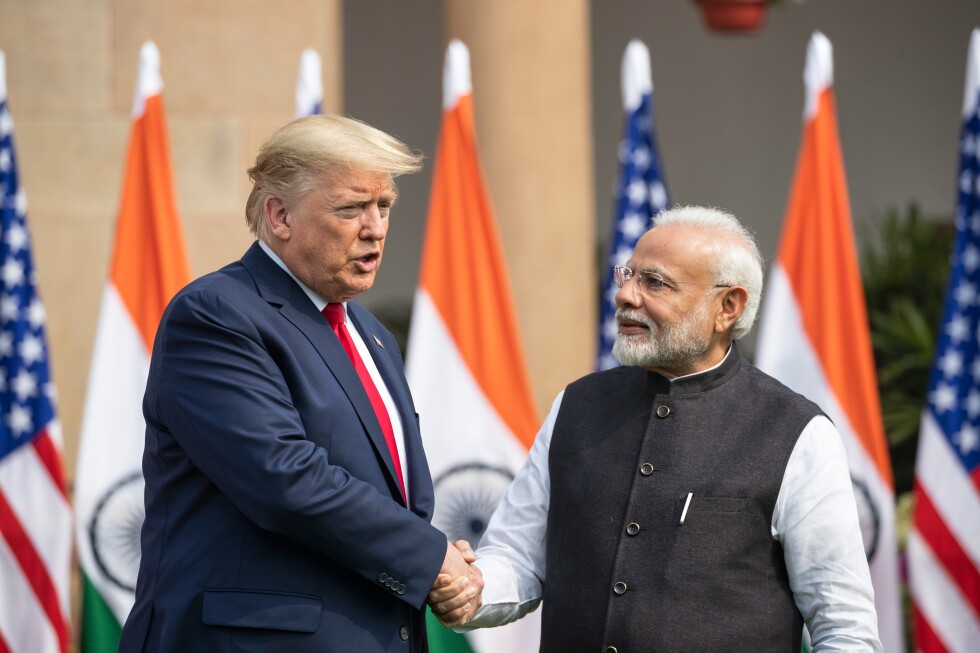
In a significant diplomatic development, former President Donald Trump announced a major trade agreement with India that would reduce U.S. import tariffs on Indian goods from 25% to 18%. The arrangement comes as part of a broader understanding that India will cease purchasing Russian crude oil, a move Trump claims will help end the conflict in Ukraine.
The announcement, made through Trump’s Truth Social platform on Monday, represents a reversal of previously imposed punitive tariffs that had targeted India for its continued acquisition of Russian energy resources. According to Trump, the agreement also stipulates that India will gradually eliminate import duties on American products and commit to purchasing $500 billion worth of U.S. goods, though specific timelines remain unspecified.
Indian Prime Minister Narendra Modi expressed enthusiasm about the tariff reduction, describing Trump’s leadership as ‘vital for global peace, stability, and prosperity’ in a social media post. However, the Indian government has maintained notable silence regarding the precise details of the arrangement, particularly concerning the cessation of Russian oil imports.
The political response in India has been mixed. Lawmakers from the ruling coalition celebrated the agreement as a diplomatic achievement, while opposition parties raised serious concerns about potential impacts on sensitive sectors, particularly agriculture. Parliamentary proceedings were disrupted as opposition members demanded clarity on how the deal might affect domestic agricultural markets and employment.
U.S. Secretary of Agriculture Brooker Rollings welcomed the development, emphasizing the potential benefits for American farmers through expanded access to India’s substantial market. This perspective contrasts with Indian analysts who urge caution, noting that achieving $500 billion in American imports would require decades given current trade volumes of approximately $50 billion.
Finance Ministry official Arvind Shrivastava characterized the agreement as an opportunity to deepen trade relations between two economic powerhouses, potentially creating new opportunities for India’s manufacturing and technology sectors. However, trade expert Ajay Srivastava highlighted the need for clarification on product coverage, implementation timelines, and protections for sensitive industries before celebrating the announcement.