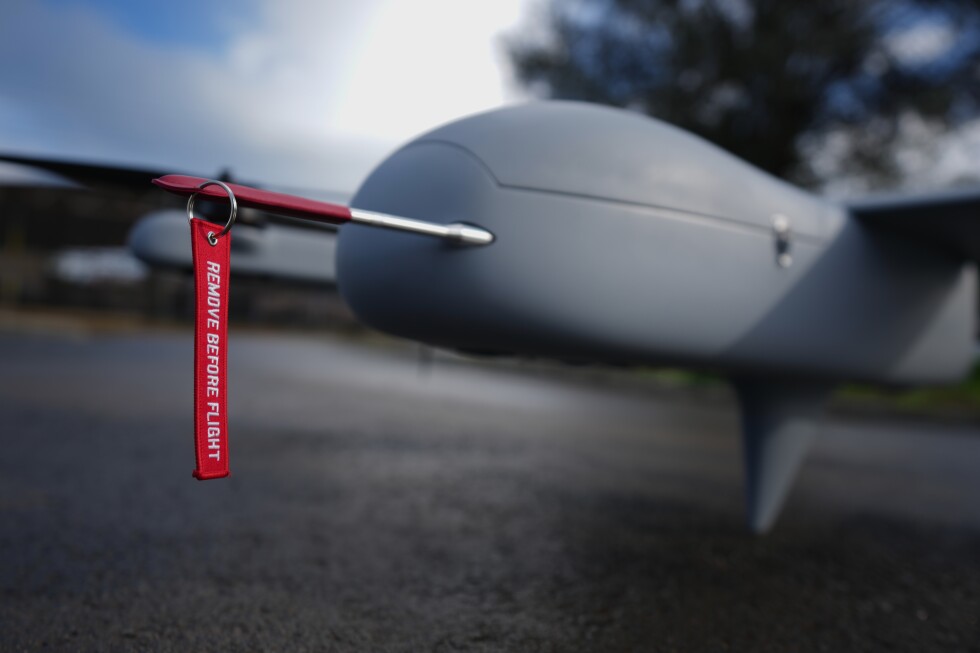
NICOSIA, Cyprus — From a modest 5,000-square-meter facility on Europe’s southeastern periphery, an improbable defense manufacturing revolution is underway. Cypriot company Swarmly has deployed over 200 of its H-10 Poseidon drones to Ukrainian artillery units, accumulating more than 100,000 flight hours while providing all-weather targeting capabilities against Russian forces.
The factory’s constant hum of grinders shaping composite plastics belies its significant output: uncrewed vehicles destined for global clients including Indonesia, Benin, Nigeria, India, and Saudi Arabia. Beyond aerial drones, Swarmly’s secure storage contains marine drones equipped with high-definition cameras and .50-caliber machine guns, representing the cutting edge of naval warfare technology.
Russia’s invasion of Ukraine has catalyzed a continental defense transformation, with even the smallest EU nations developing indigenous high-tech military capabilities. This strategic shift has positioned Ukraine as an unexpected testing ground and development partner for European drone technology.
The Baltic states, Denmark, and Greece have similarly accelerated domestic drone and counter-drone programs. Greece’s 25-billion euro military modernization now prominently features unmanned systems, while Lithuania’s VILNIUS TECH consortium advances UAV development and automated mine detection.
Federico Borsari of the Center for European Policy Analysis notes: “Swarmly and similar companies demonstrate Europe’s private sector commitment to innovating and mass-producing defense items, particularly uncrewed systems.”
UAVs are fundamentally reshaping modern warfare by providing cost-effective force multiplication. Swarmly’s satellite-guided Hydra marine drone, priced at 80,000 euros, offers the potential to neutralize billion-euro warships—a tactical reality already demonstrated by Houthi attacks in Yemen.
Fabian Hinz of the International Institute for Strategic Studies emphasizes the low barriers to entry: “UAVs utilize readily available global components, eliminating the need for decades of material science experience or massive industrial investment.”
This defense renaissance responds to dual pressures: Russian aggression and uncertain NATO relations during the Trump administration. The EU has committed billions through its Security Action for Europe (SAFE) program, with Cyprus—currently holding the EU presidency—set to receive 1.2 billion euros in low-cost loans.
Cyprus’s emerging defense ecosystem now comprises approximately 30 companies and research centers developing dual-use technologies including robotics, communications networks, and satellite surveillance. Panayiotis Hadjipavlis of Cyprus’ Defense Ministry asserts: “We possess niche capabilities in high-tech products that demand serious consideration”—a message directed at major defense contractors.
As NATO Secretary-General Mark Rutte recently urged: “Bring your ideas, test your ingenuity, and use NATO as your test bed.” Yet Borsari cautions that drone effectiveness remains contingent on operational conditions, operator training, and logistical support—variables that temper technological advantages on modern battlefields.