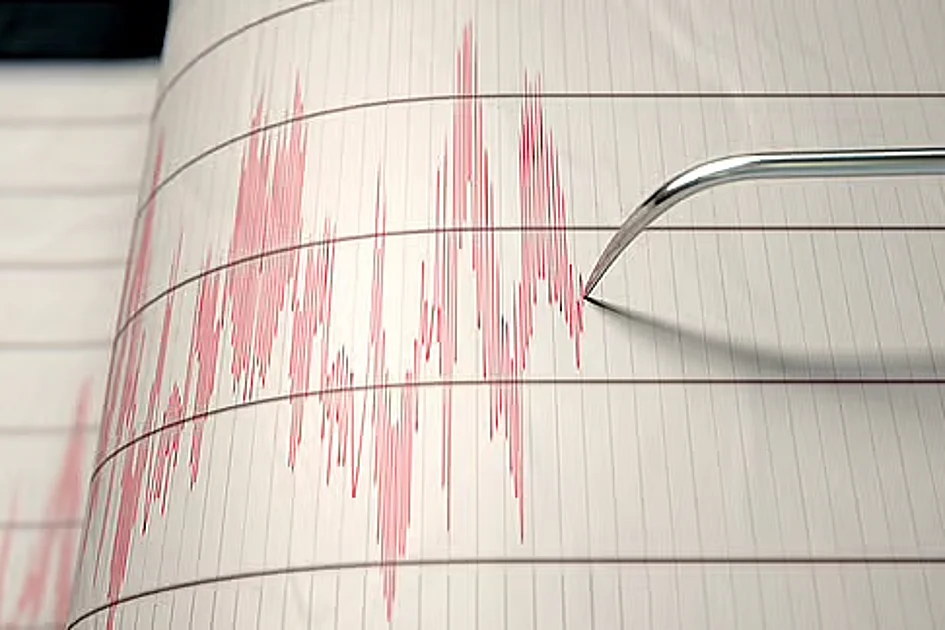
A moderate 4.1 magnitude earthquake struck Bangladesh early Tuesday, marking the second seismic event to impact the nation within a 48-hour period. According to data released by India’s National Centre for Seismology (NCS), the tremor originated at a significant depth of 150 kilometers beneath the Earth’s surface, with its epicenter pinpointed at coordinates 22.84°N latitude and 89.01°E longitude at approximately 4:06 AM IST.
This latest seismic activity follows a smaller 3.0 magnitude quake that occurred on Sunday morning at a shallower depth of 20 kilometers. While both events were considered moderate in intensity, they have reignited concerns about Bangladesh’s particular vulnerability to seismic hazards.
The geological context reveals why Bangladesh remains on high alert. The nation sits at the precarious convergence of three massive tectonic plates—the Indian, Eurasian, and Burma plates—which are in constant motion. Scientific measurements indicate the Indian plate is steadily advancing northeastward at approximately 6 centimeters annually, while the Eurasian plate moves north at about 2 centimeters per year above it.
This tectonic pressure has created five major fault zones in and around Bangladesh: the Bogura fault zone, Tripura fault zone, Shilong Plateau, Dauki fault zone, and Assam fault zone. These geological features contribute to the identification of 13 distinct earthquake-prone areas within the country, with the regions of Chattogram, Chattogram Hill Tracts, and Jaintiapur of Sylhet classified as extreme risk zones.
The situation is particularly alarming given Bangladesh’s extreme population density. In 2022, the capital city Dhaka recorded approximately 30,093 residents per square kilometer, ranking among the most densely populated urban areas globally. This combination of high seismic risk and extreme population density has earned Dhaka a place among the world’s 20 cities most vulnerable to earthquake damage.
Seismologists note that while earthquakes occur frequently worldwide—approximately every 30 seconds somewhere on Earth—most are too minor to be detected without instrumentation. The logarithmic nature of the Richter scale means that each whole number increase represents a tenfold increase in measured amplitude and approximately 31.6 times more energy release.