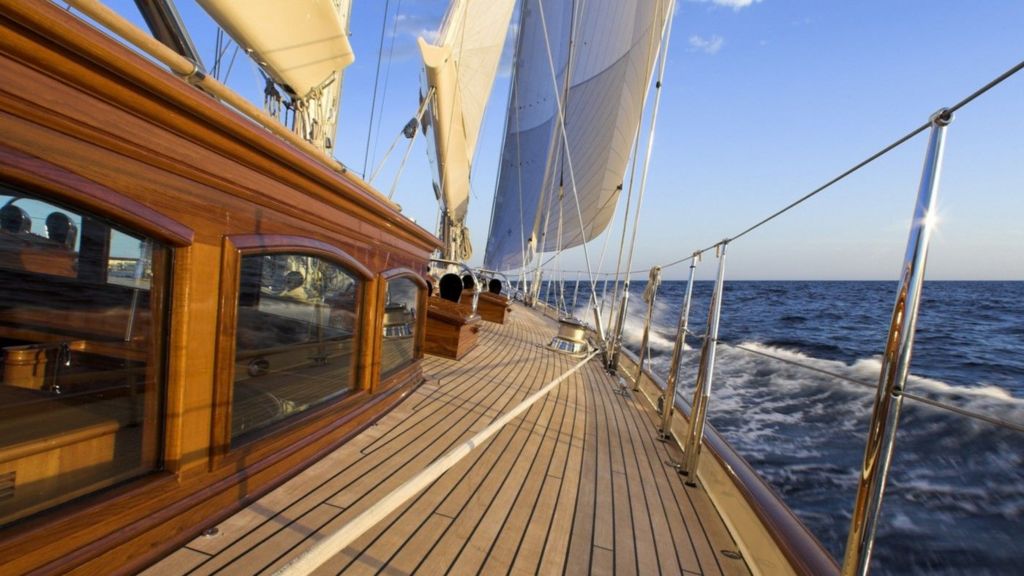
The global luxury yacht industry is undergoing a significant transformation as it confronts the ethical and legal implications of using Myanmar teak, a prized tropical hardwood now largely prohibited in Western markets. This shift follows high-profile cases involving superyachts belonging to tech billionaires, including Jeff Bezos’s $500 million vessel Koru, built by Netherlands-based Oceanco. Both Oceanco and UK-based Sunseeker faced substantial fines in late 2024 for using this sanctioned timber, which they described as unintentional breaches of due diligence.
Myanmar teak, renowned for its rot resistance, density, and aesthetic appeal, has long been the standard for high-end yacht decking and interiors. However, its harvest from old-growth forests is controlled by the country’s military-linked sector, leading to international trade sanctions following the 2021 coup. These sanctions, building on existing restrictions, have made imports into the UK, EU, and US illegal.
The exhaustion of pre-sanction stockpiles and increasing regulatory scrutiny are now accelerating the adoption of alternatives. The industry is exploring a range of innovative materials, including thermally-modified woods, fully synthetic composites, and engineered teak laminates. Major players like Sunreef Yachts, based in Poland and Dubai, have announced a complete transition away from teak. The company now utilizes thermally-modified woods that not only mimic teak’s appearance but offer superior thermal performance, keeping decks cooler and reducing cabin air conditioning needs.
New products like Tesumo, developed through a collaboration between the University of Göttingen and German shipyard Lürssen, are gaining traction. This material uses a fast-growing African hardwood that undergoes heat treatment and resin impregnation. It has already been installed on high-profile superyachts, including one linked to Google co-founder Sergey Brin.
Despite these advances, challenges remain. Plantation-grown teak is often viewed as inferior due to shorter, narrower boards and inconsistent quality. While some smaller builders, like the UK’s Jeremy Rogers, continue to source from certified sustainable plantations in Java, the industry consensus is shifting. The driving force is a combination of regulatory pressure, supply chain sustainability concerns, and a growing recognition that modern alternatives can meet the exacting standards of the world’s most discerning yacht owners.