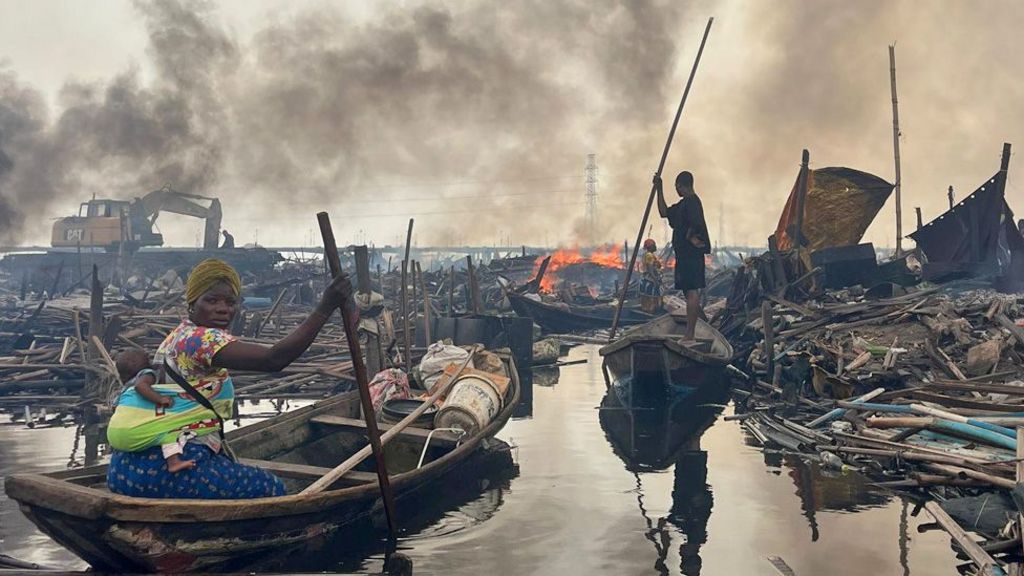
In the heart of Lagos, Nigeria’s sprawling metropolis, a humanitarian crisis unfolds as thousands of residents face forced evictions from their waterfront homes in Makoko, the country’s largest informal settlement. The Lagos State government maintains these demolitions target structures built dangerously close to high-voltage power lines, citing critical health and safety concerns. However, community members and advocacy groups allege these actions represent systematic land appropriation for elite urban development projects.
Anna Sobie, a mother of five, exemplifies the human toll of this operation. Her family now sleeps on the fractured wooden platform that once supported their home, exposed to the elements without adequate shelter. “We’re sleeping in an open space under the rain,” Sobie recounts, describing how excavators arrived with minimal warning while her family was inside their home.
The demolitions, which began two days before Christmas, have reportedly displaced over 10,000 residents and destroyed more than 3,000 structures including homes, schools, clinics, and churches according to a coalition of ten non-governmental organizations. These groups document alarming tactics including the use of armed security personnel, bulldozers, and alleged arson attacks on occupied dwellings.
Historical context reveals Makoko was established in the 19th century by fishing communities, with residents claiming customary land rights predating modern Lagos. The settlement’s population estimates range from 80,000 to 200,000 people, many of whom are low-income families and migrants seeking economic opportunities in Nigeria’s commercial capital.
Governor Babajide Sanwo-Olu’s administration defends the actions as necessary urban management, emphasizing the proximity of structures to electrical infrastructure that poses lethal risks. Special Adviser on Urban Development Olajide Abiodun Babatunde stated: “No responsible government anywhere in the world can allow people to live directly under high-tension cables or obstruct vital waterways.”
The government has promised financial compensation to affected families but has not provided alternative accommodation. This response has failed to satisfy residents like Elizabeth Kakisiwe, who returned from market to find her home demolished and possessions destroyed. “When rain fell days later, we were drenched,” she describes. “At night, we sit in the cold.”
Tensions escalated recently when police deployed tear gas against more than 1,000 protesters marching toward the state legislature, resulting in injuries and alleged fatalities. Community leaders report five deaths, including children, from tear gas exposure during earlier demolition operations—claims the government says it will investigate.
Urban development experts note this conflict occurs against Lagos’s severe housing deficit, which has grown from 2.95 million units in 2016 to 3.4 million in 2025 despite increased construction. The city’s rapid population growth and escalating costs have pushed more residents into informal settlements, creating recurring clashes between urban development goals and community rights.
As excavators continue their work along the lagoon, displaced residents salvage firewood from debris while children repair fishing nets amid the destruction. The remaining structures stand as fragile testaments to a community fighting to preserve its existence against the pressures of modern urban development.