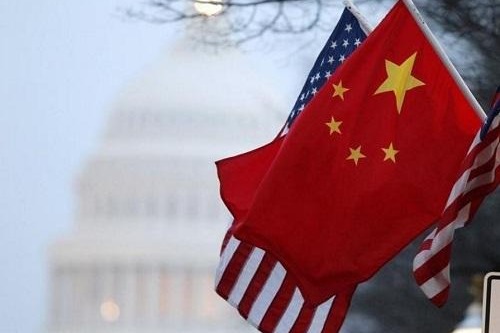
ATLANTA – A specialized forum dedicated to examining the trajectory of Sino-American relations has concluded that engaging younger generations represents the most promising pathway toward stabilizing the increasingly complex bilateral relationship. The 2026 Jimmy Carter Forum on US-China Relations, held January 30 in Atlanta, brought together veteran diplomats, academics, and professionals who have built careers navigating the evolving dynamics between the world’s two largest economies.
The conference, exclusively featuring female speakers to highlight women’s contributions to bilateral relations, opened with a keynote address from Sarah Beran, former deputy chief of mission at the US embassy in Beijing and senior director for China and Taiwan affairs on the White House National Security Council. Beran characterized the relationship as demonstrating ‘notable resilience’ despite nearly a decade of strategic competition, while acknowledging a concerning ‘structural decline with no clear endpoint.’
Veteran participants like Jan Berris, vice-president of the National Committee on US-China Relations and a ping pong diplomacy participant since 1971, described current conditions as ‘the worst time in the relationship.’ This assessment stood in stark contrast to the ‘golden age’ experienced by younger panelists including Elizabeth Knup of The Asia Society, Caroline Pan of the 1990 Institute, and Rosie Levine of the US-China Education Trust, all of whom had formative professional experiences in China during more cooperative eras.
Despite acknowledging significant challenges in people-to-people exchanges – from policy restrictions to funding limitations – participants identified digital platforms as unexpected bridges between American and Chinese youth. Levine highlighted how social media content on Instagram and TikTok has generated genuine curiosity about contemporary Chinese life among American youth, often contradicting mainstream media narratives.
Practical examples of continued engagement emerged from younger attendees. Mackenzie Miller, program manager of The Penn Project on the Future of US-China Relations, reported observing ‘very engaged and very interested’ American students currently studying in China. Emily Conrad, a PhD candidate at Fudan University building a literal US-China family with her Chinese husband, noted the democratizing effect of Chinese social platforms like Xiaohongshu (Little Red Book) in making Chinese culture accessible to Americans.
The consensus emerged that while returning to previous eras of cooperation remains unlikely, cultivating mutual understanding through digital exchanges, educational programs, and cultural curiosity represents the most viable strategy for managing strategic competition and preventing escalation.