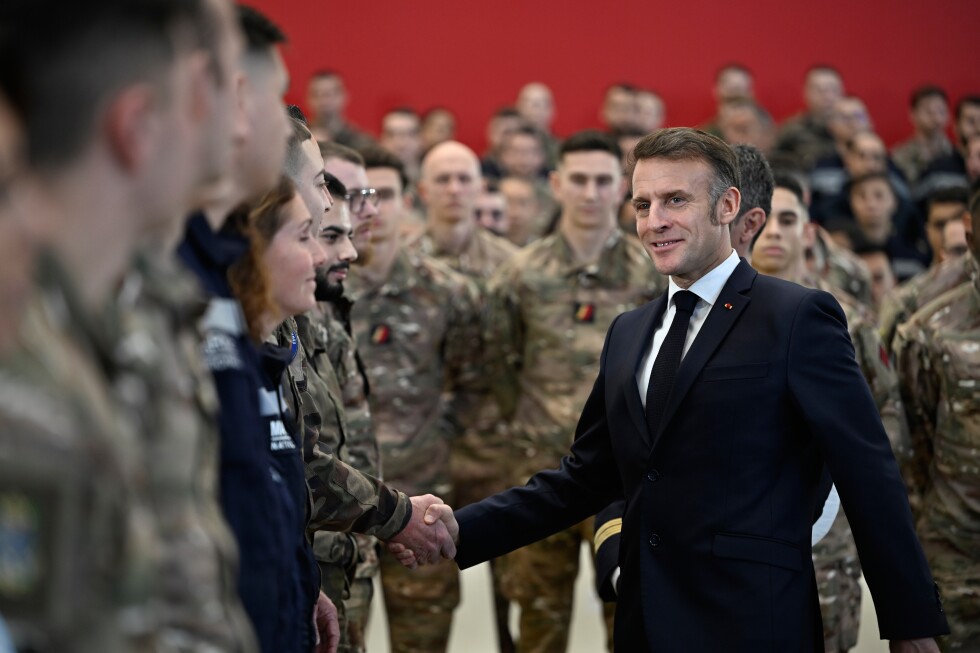
PARIS — After months of political discord, France’s delayed annual budget is poised for final approval on Monday, paving the way for substantial increases in defense expenditure as pledged by President Emmanuel Macron. The budgetary process, characterized by parliamentary fragmentation and governmental instability, ultimately required Prime Minister Sébastien Lecornu to invoke special constitutional powers to bypass legislative gridlock and enact the legislation without a formal vote.
The defense allocation represents a significant departure from broader austerity measures, with the military sector receiving an exceptional €6.7 billion ($7.9 billion) augmentation compared to 2025 levels. This financial injection will facilitate the acquisition of advanced military assets including a nuclear-powered attack submarine, 362 armored vehicles for army modernization, and new Aster surface-to-air missile systems. Concurrently, France is launching an expanded voluntary military service program targeting thousands of young citizens aged 18-19.
Macron’s administration is pursuing deficit reduction targets aiming to decrease the budget deficit from 5.4% to 5% of GDP, while implementing spending cuts across most government departments. This fiscal consolidation occurs amid pressure from European Union institutions and credit rating agencies concerned about France’s debt sustainability within the Eurozone’s second-largest economy.
The budgetary process revealed the government’s precarious parliamentary position, forcing concessions including the suspension of Macron’s controversial pension reforms that would have raised the retirement age. Corporate taxation will see increases, with an additional levy on large companies projected to generate €7.3 billion ($8.7 billion) in revenue.
As Macron approaches the final year of his presidency, his attention has increasingly shifted toward international affairs and defense strategy. Recent diplomatic initiatives include advocating for security guarantees for Ukraine, demonstrating European solidarity with Greenland, and supporting the designation of Iran’s Revolutionary Guard as a terrorist organization by the EU. The president’s foreign policy stance gained particular attention during the Davos summit, where his remarks expressing preference for ‘respect over bullies’ were widely interpreted as a rebuke to former President Donald Trump’s tariff threats.