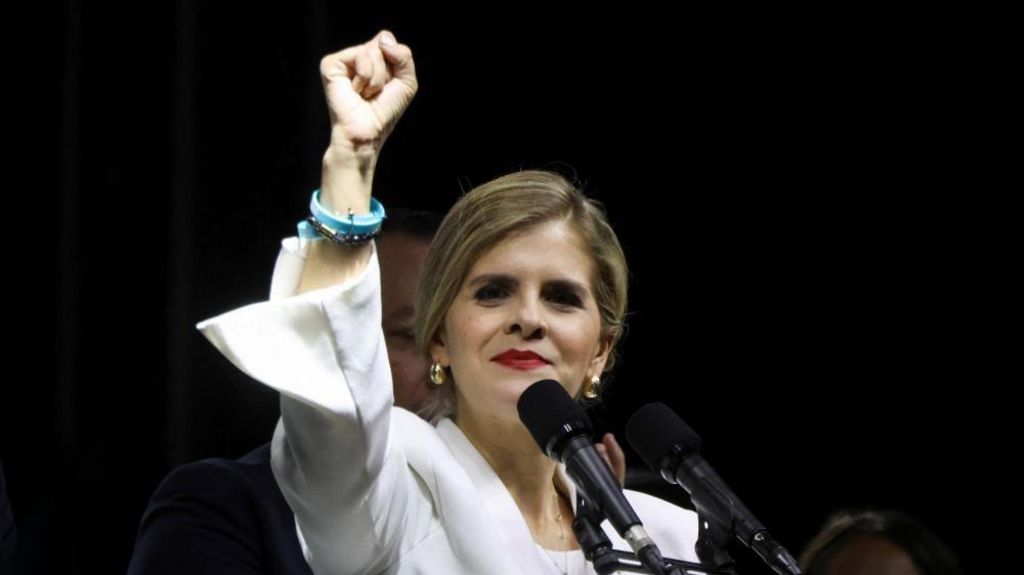
Costa Rica has ushered in a new political era with the decisive first-round victory of Laura Fernández, the conservative Sovereign People’s Party candidate, in Sunday’s presidential election. With over 88% of ballots tallied, Fernández secured a commanding 48% of the vote, eliminating any requirement for a runoff election as she surpassed the 40% threshold for outright victory. Her nearest competitor, centrist contender Álvaro Ramos, publicly conceded defeat following the results announcement.
The 39-year-old president-elect ran as the chosen successor to outgoing President Rodrigo Chaves, pledging to intensify his administration’s aggressive anti-crime measures. This platform resonated strongly with voters increasingly alarmed by escalating drug-related violence that has challenged Costa Rica’s historical reputation as one of Central America’s most stable democracies.
In her victory address, Fernández committed to continuing Chaves’ policies while striking a balance between firm governance and institutional respect. ‘My government will be one of dialogue and national harmony, respectful and firmly based in the rule of law,’ she declared, while simultaneously criticizing opposition parties for what she termed ‘obstruction and sabotage’ during her predecessor’s term.
Fernández’s approach appears influenced by Salvadoran President Nayib Bukele’s controversial security model, which has dramatically reduced homicide rates through stringent measures. The president-elect has outlined plans to declare states of emergency in gang-dominated territories and complete construction of a maximum-security prison modeled after El Salvador’s Cecot facility.
Significantly, Fernández’s party captured 30 of 57 parliamentary seats, providing stronger legislative support than enjoyed by Chaves. Constitutional term limits prevented Chaves from seeking reelection, though Fernández has indicated she may appoint him to a cabinet position in her administration, which will be inaugurated on May 8.
International relations are expected to maintain continuity, particularly regarding migration agreements with the United States. The Trump administration’s designation of Costa Rica as a ‘key global cocaine transshipment point’ underscores the complex security challenges facing the incoming administration as transnational criminal networks expand their regional operations.