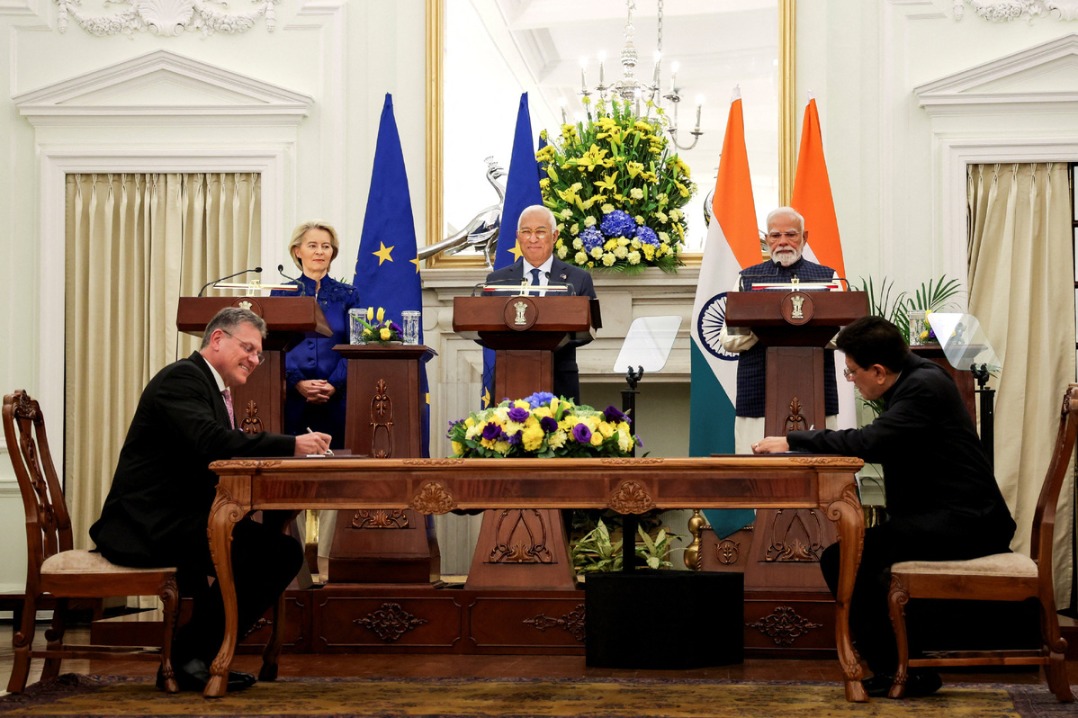
The recently announced free trade agreement between India and the European Union, hailed as a historic achievement after two decades of negotiations, now confronts significant implementation challenges that could delay its full effect until 2027, according to economic analysts and trade experts.
The breakthrough agreement, signed during European Commission President Ursula von der Leyen’s visit to New Delhi for India’s 77th Republic Day celebrations, aims to eliminate or substantially reduce tariffs on over 90% of traded goods. The pact represents a strategic alignment between the two economies seeking alternative trade partnerships amid increasing US tariff pressures.
However, the implementation timeline faces a complex multistage legal process requiring formal ratification by the European Parliament, approval from all EU member states, and subsequent endorsement by India’s Parliament. Madhavi Arora, Chief Economist at Emkay Global Financial Services, indicates this ratification process could extend through much of 2026, potentially delaying full implementation by approximately one year.
Professor Dibyendu Maiti of the Delhi School of Economics detailed the extensive procedural requirements, including legal scrubbing, translation into all official EU languages, and separate parliamentary approvals from both blocs. Given the partners’ historical legal processes, experts suggest the agreement might require years to reach its final operational form.
Additional challenges include India’s need to prepare its export sectors for the EU’s stringent regulatory environment, characterized by rigorous emissions standards, labor regulations, and the Carbon Border Adjustment Mechanism (CBAM). Biswajit Dhar, former professor at Jawaharlal Nehru University, warned that without adequate preparation, Indian businesses might struggle with compliance costs that could undermine their competitive advantages.
The timing presents another concern, as noted by Ajay Srivastava of the Global Trade Research Initiative. Indian exporters currently face weak US demand, while benefits from European market access remain at least one year away, creating a concerning near-term mismatch.
Despite these hurdles, the agreement promises significant long-term advantages for Indian textiles, leather goods, and marine products, potentially elevating the country’s competitive position against rivals like Bangladesh and Vietnam in the European market.