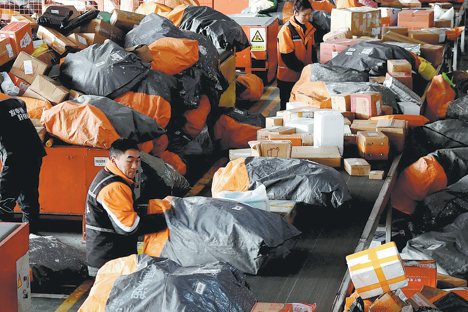
China’s express delivery sector is demonstrating remarkable resilience and technological sophistication as it manages the unprecedented package volumes generated by Spring Festival consumer demand. With the holiday period (February 15-23) approaching, logistics networks nationwide are operating at multiplied capacity to handle the annual surge of gifts, specialty foods, and seasonal commodities traversing the country.
The convergence of e-commerce platforms and enhanced delivery capabilities has fundamentally transformed traditional holiday preparations. Case in point: Shao Fang, a provincial migrant worker from Henan now based in Hainan, exemplifies the shifting paradigm. Rather than returning home early for holiday preparations, she shipped nuts, snacks, and cakes via express delivery, noting, ‘I just sent everything ahead, and when I get home, I can focus on being with my family.’
Operational metrics reveal the scale of this logistical undertaking. At a Luoyang e-commerce warehouse, daily order processing has doubled from the typical 30,000 to approximately 60,000, with projections exceeding 100,000 orders immediately preceding the festival. J&T Express handles over 80% of this volume, employing extended shifts and increased delivery frequencies to manage demand.
The product composition reflects evolving consumption patterns. Beyond packaged foods, regional specialties like Luoyang peonies have gained prominence through livestream commerce. Farmer Wei Linqiang’s operation expanded from three to eight greenhouses, with 40% of his 6,000-pot peony output now reaching customers across 20 provinces via online platforms.
This phenomenon represents broader economic transformations. Liu Jiang of the State Post Bureau observes, ‘The Spring Festival shipping surge has become an important force in expanding domestic consumption,’ noting the sector’s 13.6% annual growth in 2025 with 199 billion parcels generating ¥1.5 trillion in revenue.
Technological integration is critical to managing this scale. J&T Express outlets have deployed autonomous delivery vehicles handling 3,000+ daily packages along fixed routes, alleviating pressure on human couriers. The Bureau has implemented a structured service window (February 2-March 13) mandating volume forecasting, service maintenance, and worker protections including overtime compensation and family reunion arrangements.
As spokesperson Liu Ying emphasized: ‘Companies must balance meeting delivery needs with respecting workers’ expectations to spend the holiday with their families.’ This equilibrium between operational demands and human considerations underscores how Spring Festival delivery has become both a stress test for logistics infrastructure and a testament to its evolving capabilities in China’s consumption economy.