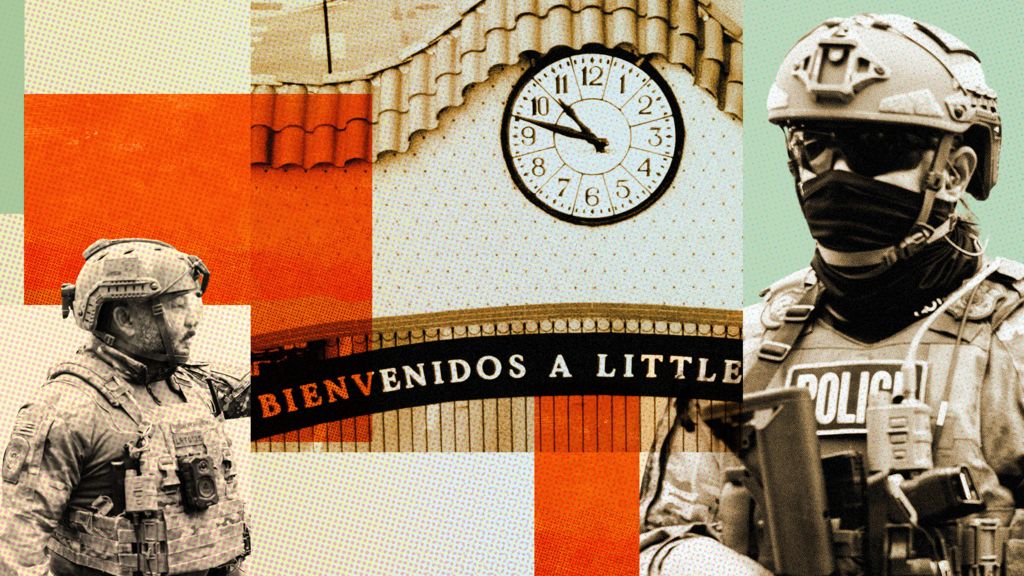
Chicago’s historic Little Village neighborhood, traditionally known as the “Mexican Magnificent Mile,” has transformed into an economic ghost town following intensified immigration enforcement operations. The Trump administration’s Operation Midway Blitz, launched in September with the stated purpose of targeting “criminal illegal aliens,” has created an atmosphere of pervasive fear that has devastated local commerce.
Business owners along the 26th Street corridor report catastrophic revenue declines ranging from 30% to 60%, with some establishments recording zero sales over extended periods. Carlos Macias, proprietor of Carniceria y Taqueria Aguascalientes established by his father fifty years ago, describes how armed ICE agents wearing balaclavas conducted raids that traumatized both employees and customers. “Business has dropped half during the week, sometimes even more than that,” Macias states, noting the incident remains etched in his memory.
The economic impact extends beyond individual businesses. This two-mile commercial thoroughfare represents one of Chicago’s most significant economic hubs outside downtown, generating substantial tax revenues through predominantly Latino-owned enterprises. Alderman Michael Rodriguez reveals that even during peak lunch hours, restaurants remain empty, and public parking spaces sit vacant for the first time in living memory—a situation more severe than during the pandemic.
While the Department of Homeland Security justifies the operation as necessary for public safety, citing the arrest of over 800 undocumented migrants including sex offenders and gang members, the human and economic costs continue mounting. Street vendors have largely disappeared from corners they traditionally occupied, fearing family separation despite many having lived in the community for decades.
Chicago officials have responded with the Shopping in Solidarity initiative, encouraging residents to support local businesses. However, established institutions like Taqueria Los Comales have been forced to reduce employee hours dramatically. Owner Christina Gonzalez, also a Chamber of Commerce board member, explains the ripple effect: “The community depends on these small businesses for jobs and income. If they don’t have the hours to withstand that, then they aren’t getting the income that they need.”
The political dimension remains deeply divisive. While Republican congressional candidate Lupe Castillo supports the enforcement actions, even some Trump voters like shoe store owner Adolfo Peña express bitter disappointment: “This is the worst thing that has happened to us. Unfortunately, I voted for him. That hurts me the most.”
With Congress approving $170 billion in funding for ICE and Border Patrol through 2029, and plans to hire thousands of additional agents, Little Village residents brace for prolonged enforcement operations that continue to reshape their community’s social and economic fabric.