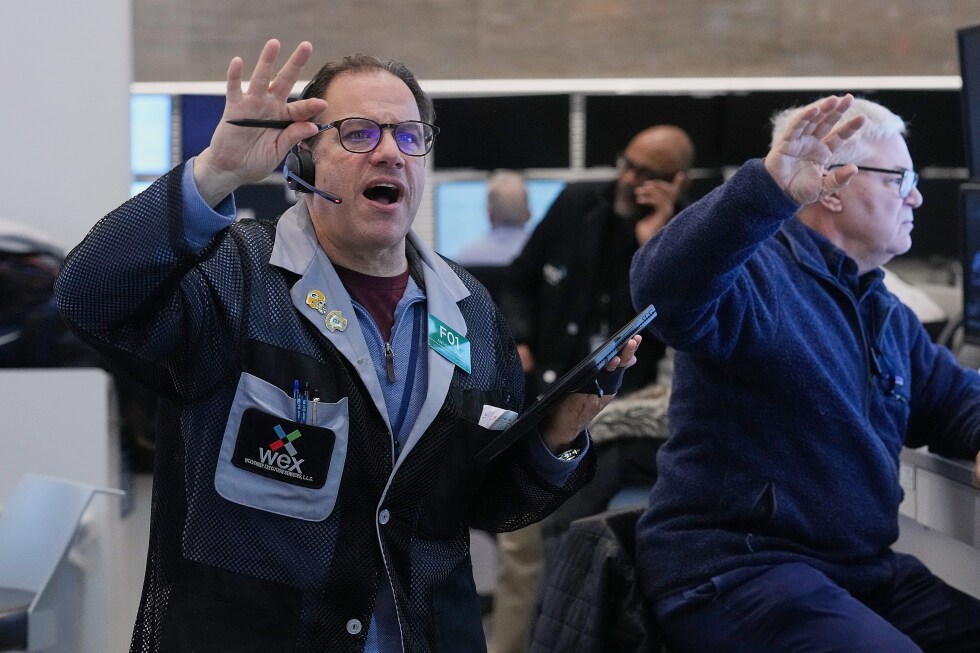
NEW YORK — Wall Street experienced significant volatility on Friday as investors grappled with the implications of President Donald Trump’s nomination of Kevin Warsh to chair the Federal Reserve, triggering dramatic swings across multiple asset classes.
The S&P 500 declined 0.4%, recovering from an earlier 1.1% plunge, while the Dow Jones Industrial Average dropped 179 points (0.4%). The technology-heavy Nasdaq composite suffered the steepest losses at 0.9%. The U.S. dollar demonstrated considerable instability before ultimately strengthening, reflecting market uncertainty regarding future monetary policy directions.
Precious metals markets witnessed particularly extreme movements, with gold prices collapsing 11.4% to settle at $4,745.10 per ounce—a dramatic reversal following its remarkable 12-month rally that had seen prices approximately double. Silver experienced even more severe declines, plummeting 31.4% after its own spectacular rally.
The nomination has ignited intense scrutiny regarding the Federal Reserve’s future independence, a cornerstone of central banking that allows for politically difficult but economically necessary decisions. Warsh, a former Fed governor, brings established credentials but also represents Trump’s preference for lower interest rates, creating tension between presidential influence and central bank autonomy.
Market analysts offered contrasting interpretations. Some viewed Warsh’s Fed experience as reassuring for institutional independence, while others noted his recent criticisms of current Chair Jerome Powell and alignment with Trump’s monetary policy views since 2009. Thierry Wizman, Macquarie Group strategist, observed that while Warsh might not immediately push for rate cuts, he could prove more amenable to presidential preferences when economic conditions change.
The metals sell-off battered mining stocks, with Newmont declining 11.5% and Freeport-McMoRan dropping 7.5%. These reversals followed massive rallies driven by investors seeking safety against multiple concerns: potential Fed politicization, elevated stock valuations, trade tariff threats, and soaring global government debt.
Market losses were partially mitigated by strong performances from major technology companies. Tesla rebounded with a 3.3% gain after better-than-expected quarterly profits, while Apple added 0.5% following its own strong earnings report.
Bond markets saw the 10-year Treasury yield edge up to 4.25%, with upward pressure coming from hotter-than-expected wholesale inflation data that might compel the Fed to maintain current interest rates rather than implement cuts.
International markets showed mixed performance, with European indexes generally advancing while Asian markets varied. Indonesian stocks rose 1.2% following the resignation of the country’s stock exchange CEO after recent transparency concerns.
The nomination now awaits Senate confirmation, leaving markets to weigh the balance between established Fed traditions and presidential influence over critical interest rate decisions.