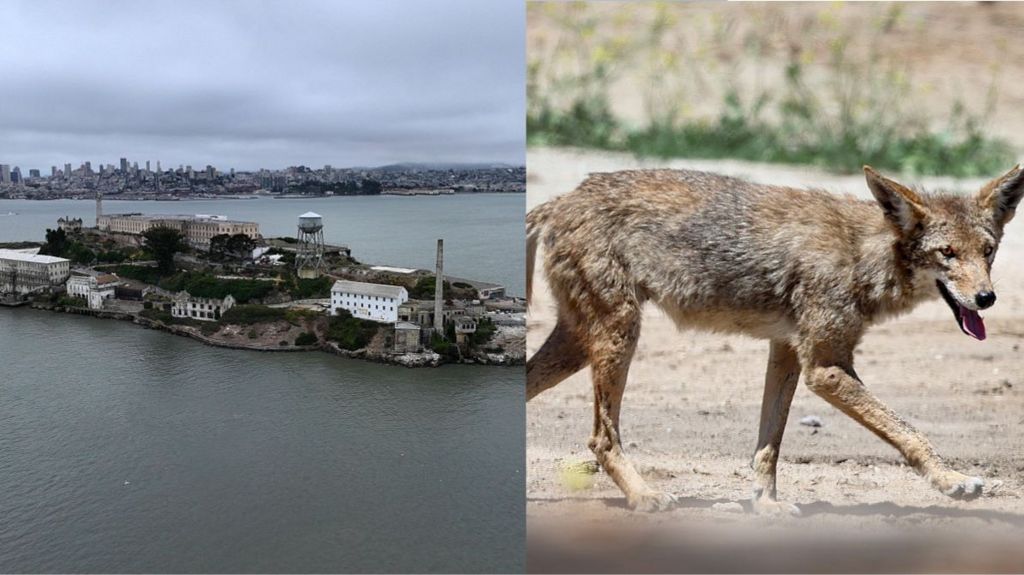
In an unprecedented wildlife event, a solitary coyote has successfully completed a mile-long swim across the treacherous currents of San Francisco Bay to reach the shores of Alcatraz Island. Dubbed Floyd by observers, this resilient canine represents the first documented coyote presence on the island since its transfer to the National Park Service in 1972.
The Golden Gate National Recreation Area (GGNRA) has confirmed Floyd’s identity through photographic evidence, matching him to sightings from nearly two weeks prior. Park biologists are now conducting intensive monitoring to understand how the animal is surviving on the 22-acre island renowned for its abandoned federal prison and lacking natural freshwater sources.
Tour guide Aidan Moore, who originally shared footage of Floyd’s arrival, notes the coyote appeared gaunt and shivering from the 10°C (50°F) bay waters initially but has since gained weight, apparently sustaining himself through avian predation. This dietary adaptation raises concerns among conservationists as Alcatraz serves as a registered sanctuary for seabirds, with sensitive nesting activities occurring from February through September.
Wildlife experts propose various theories regarding Floyd’s motivation for the daring crossing. Self-taught naturalist Janet Kessler, with two decades of coyote documentation experience, suggests interspecies population pressure in urban areas might have driven Floyd to seek new territory. Wildlife ecologist Brett Furnas adds that increasing coyote sightings in the Bay Area over the past 25 years indicate growing population pressures may be pushing some individuals to extreme habitat choices.
The situation presents complex management challenges for authorities. While coyotes are remarkably adaptable survivalists, Project Coyote founder Camilla Fox emphasizes that human behavior will ultimately determine outcomes. ‘Coyotes are incredibly resourceful and able to coexist even in densely populated urban environments,’ Fox notes, adding that without harassment, Floyd could potentially survive on the island—though likely facing a solitary existence without a mate.
Public access to Alcatraz remains unaffected, though concerns exist regarding potential safety risks for both the animal and tourists. Moore and colleagues continue monitoring efforts, collecting biological samples including droppings for DNA analysis to better understand Floyd’s origins and prospects.