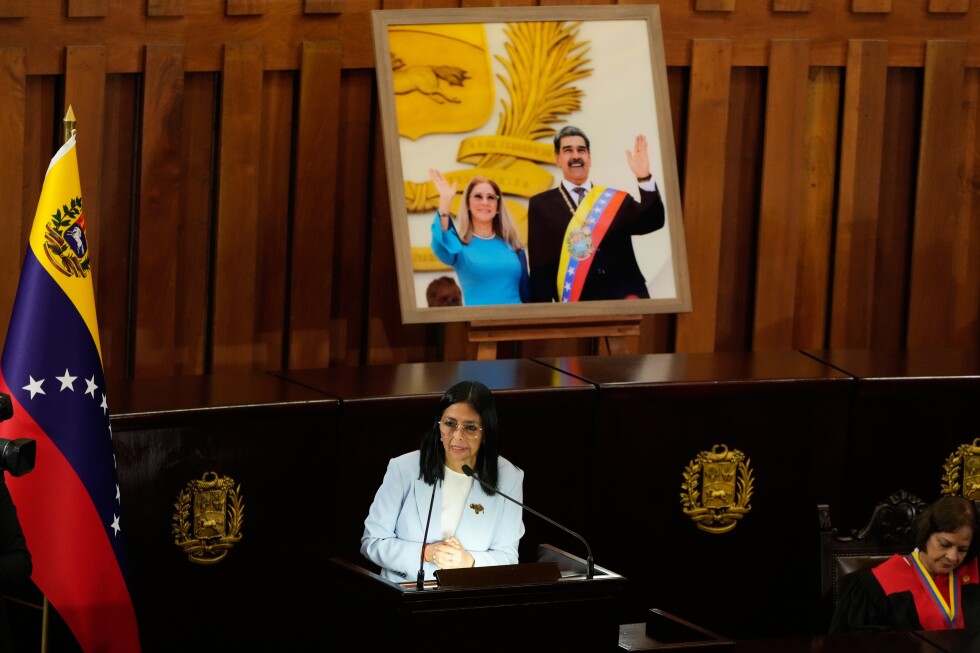
CARACAS, Venezuela — In a significant political development, Venezuela’s acting President Delcy Rodríguez unveiled legislation on Friday that could potentially secure the liberation of hundreds of detainees incarcerated for political motivations. The proposed bill specifically targets the release of opposition figures, journalists, and human rights activists who have faced government persecution.
This legislative initiative represents the latest conciliatory measure undertaken by Rodríguez since assuming executive authority on January 3, following the dramatic capture of former President Nicolás Maduro during a U.S. military operation in Caracas. The announcement came during a televised address before an assembly of justices, magistrates, and judicial officials.
Rodríguez emphasized the healing potential of the legislation, stating, “May this law serve to heal the wounds left by the political confrontation.” She confirmed that the ruling party-dominated National Assembly would expedite consideration of the bill under urgent procedures.
According to estimates by Foro Penal, a Venezuela-based prisoners’ rights organization, approximately 711 individuals remain detained across the country due to their political activities. While the government previously announced plans for prisoner releases as a goodwill gesture in early January, implementation has progressed slowly, drawing criticism from detainees’ families.
Notably, the government withheld the specific text of the proposed legislation, leaving ambiguity regarding the precise criteria for amnesty eligibility. Human rights organizations have responded cautiously to the announcement, welcoming the initiative while emphasizing the need for comprehensive implementation.
Alfredo Romero, president of Foro Penal, commented via social media: “A general amnesty is welcome as long as its elements and conditions include all of civil society, without discrimination, that it does not become a cloak of impunity, and that it contributes to dismantling the repressive apparatus of political persecution.”
Since January 8, when National Assembly president Jorge Rodríguez first announced the prisoner release initiative, the organization has documented 302 releases. Human rights group Provea issued a statement criticizing the lack of transparency and gradual pace of releases, while emphasizing that amnesty should not be construed as state clemency for those arbitrarily detained for exercising internationally protected rights.