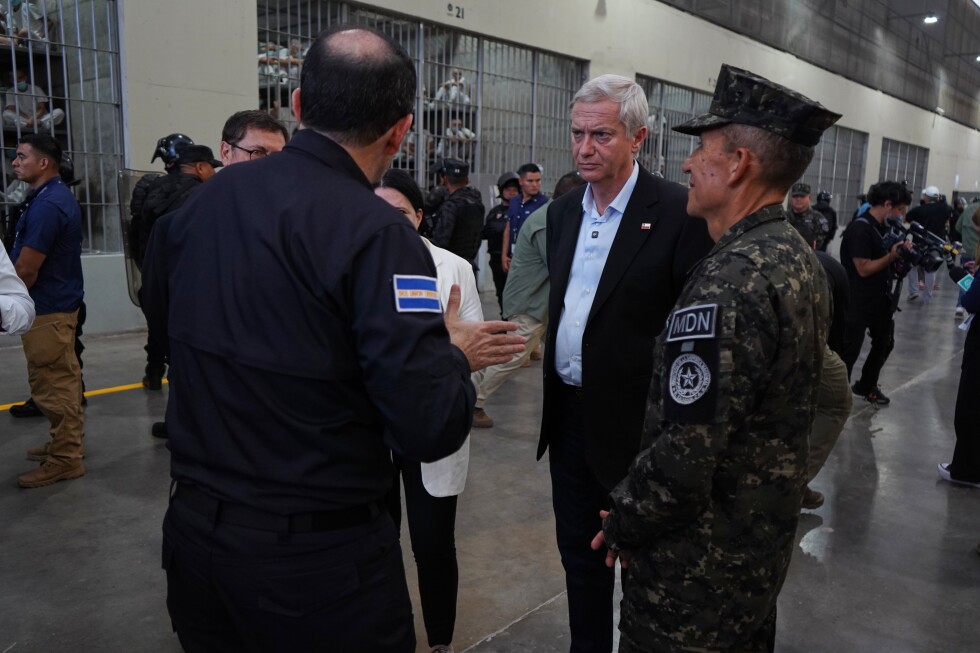
Chilean President-elect José Antonio Kast conducted a high-profile inspection of El Salvador’s Terrorism Confinement Center (CECOT) on Friday, signaling a potential shift in regional security strategies. The far-right leader, accompanied by his security minister, traveled by helicopter to the massive detention facility that has become both a symbol of effective crime suppression and a subject of intense human rights criticism.
During his visit, Kast emphasized Chile’s need to “import good ideas and proposals” for combating organized crime, drug trafficking, and terrorism. His tour included meetings with El Salvador’s security Cabinet and observation of cellblocks housing alleged gang members under conditions of total isolation. The Chilean delegation examined how El Salvador’s government has implemented its security framework, though Kast noted that any adaptation would need to consider Chile’s distinct legal and social context.
The CECOT facility, with capacity for 40,000 inmates, represents the extreme end of President Nayib Bukele’s anti-gang measures. Inmates are held in cells containing 65-70 prisoners each, without visitors, outdoor access, or rehabilitation programs. This approach has drawn condemnation from human rights organizations, with Socorro Juridico documenting 480 detention-related deaths since Bukele’s 2022 state of emergency declaration.
The visit reflects a growing trend among Latin American leaders facing security challenges. Costa Rica recently broke ground on a CECOT-inspired maximum security prison, while Honduras proposed building a gang prison on a remote island. Ecuador and Guatemala have also implemented aggressive anti-gang measures. Kast’s meeting with Bukele at the presidential palace concluded a day that highlighted the complex balance between security effectiveness and human rights protections in regional crime-fighting strategies.