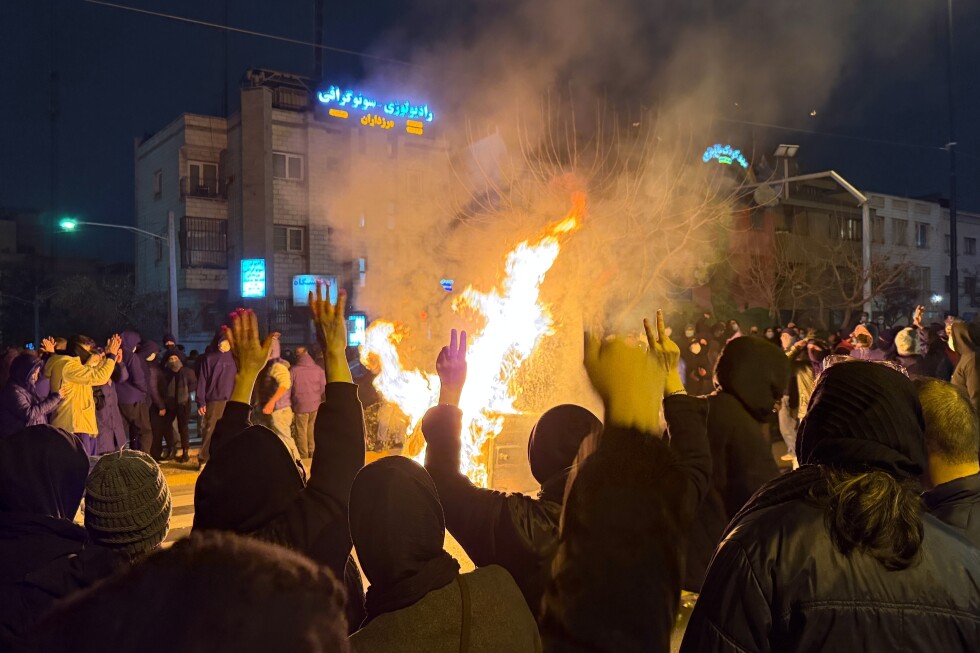
In a significant escalation of international pressure, the United States has imposed targeted sanctions against Iran’s Interior Minister Eskandar Momani for his alleged role in suppressing nationwide protests. The Treasury Department’s Friday announcement marks the latest coordinated action with European allies against Tehran’s theocratic government.
The sanctions specifically cite Momani’s oversight of Iranian law enforcement forces responsible for the deaths of thousands of peaceful demonstrators. The protests initially emerged in December amid economic hardships but rapidly evolved into broader challenges against the Islamic Republic’s authority. According to activist accounts, the subsequent government crackdown has resulted in more than 6,000 fatalities, though Iranian officials consistently label protesters as “terrorists.
This move follows the European Union’s Thursday sanctions against Momani, alongside members of Iran’s judicial system and other high-ranking officers. EU authorities stated these individuals were “all involved in the violent repression of peaceful protests and the arbitrary arrest of political activists and human rights defenders.”
Concurrently, the Treasury Department’s Office of Foreign Assets Control sanctioned Babak Morteza Zanjani, an Iranian investor accused of embezzling billions in oil revenue for government benefit. Two digital asset exchanges processing substantial volumes of funds for Zanjani were also penalized.
In a notable development, the EU has agreed to designate Iran’s paramilitary Revolutionary Guard as a terrorist organization—a largely symbolic but politically significant gesture. In response, Iran is considering reciprocal measures against EU countries’ militaries, according to Ali Larijani, secretary of Iran’s Supreme National Security Council.
The latest U.S. sanctions package additionally targets the secretary of Iran’s Supreme Council for National Security, accused of being among the first officials to advocate violence against protesters. Eighteen individuals and companies allegedly participating in money laundering operations for Iranian oil sales through shadow banking networks were also sanctioned.
Treasury Secretary Scott Bessent emphasized the department’s commitment to “target Iranian networks and corrupt elites that enrich themselves at the expense of the Iranian people,” vowing continued action against global financial transfers of “stolen” Iranian funds.
These sanctions effectively freeze any U.S. assets held by designated individuals and entities, restrict travel to the United States, and prohibit American citizens and companies from engaging in business with them.