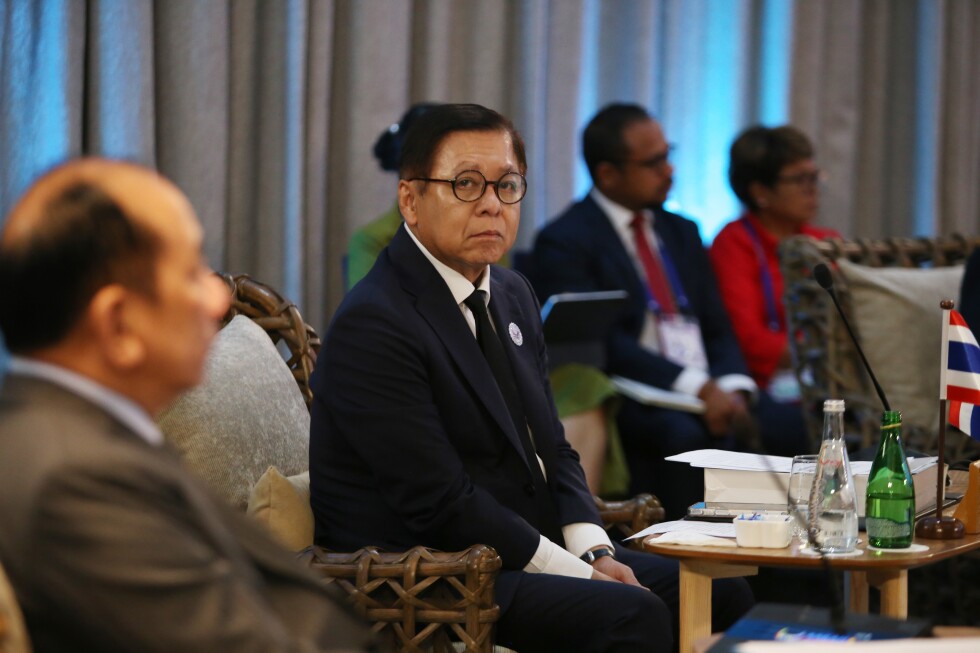
CEBU, Philippines — Five years after its introduction, the Association of Southeast Asian Nations’ (ASEAN) peace initiative for Myanmar remains unimplemented yet continues to serve as the foundation for regional diplomatic efforts, according to Thailand’s top diplomat on Friday. Thai Foreign Minister Sihasak Phuangketkeow characterized the “five-point consensus” as a crucial starting point for renewed dialogue and reconciliation despite its current stagnation.
The regional bloc faces one of its most significant challenges following Myanmar’s military coup in February 2021, which ousted Aung San Suu Kyi’s democratically elected government. The violent suppression of widespread protests triggered nationwide armed resistance, creating a complex civil conflict that has embarrassed ASEAN and tested its diplomatic capabilities.
While acknowledging the plan’s failure to achieve tangible results, Sihasak emphasized ASEAN’s commitment to engagement rather than isolation. “We don’t seek to isolate Myanmar,” he stated in an interview with The Associated Press. “We seek to bring Myanmar back to the ASEAN family.”
The consensus, established in April 2021, demands an immediate cessation of hostilities, inclusive dialogue facilitated by a special envoy, and unimpeded humanitarian access. Myanmar’s military regime has permitted limited aid delivery under restrictive conditions while disregarding other provisions.
Recent elections, which ASEAN has declined to recognize, saw military-backed parties secure overwhelming majorities. Philippine Foreign Secretary Theresa Lazaro, representing the current ASEAN chair, confirmed the bloc’s non-recognition stance, noting that the three-phase electoral process conducted between December and January lacked ASEAN endorsement.
Sihasak suggested potential benchmarks for re-engagement, including reduced violence against civilians, cessation of aerial attacks, and improved humanitarian access. He indicated that compliance could lead to gradually lifting restrictions on Myanmar’s participation in ASEAN meetings.
In a significant humanitarian appeal, Sihasak revealed he had recently proposed transferring the ailing 80-year-old Suu Kyi from prison to house arrest to improve her medical access. The Nobel laureate is serving a 27-year sentence under conditions widely condemned as politically motivated, having been kept in isolation without legal access since December 2022.