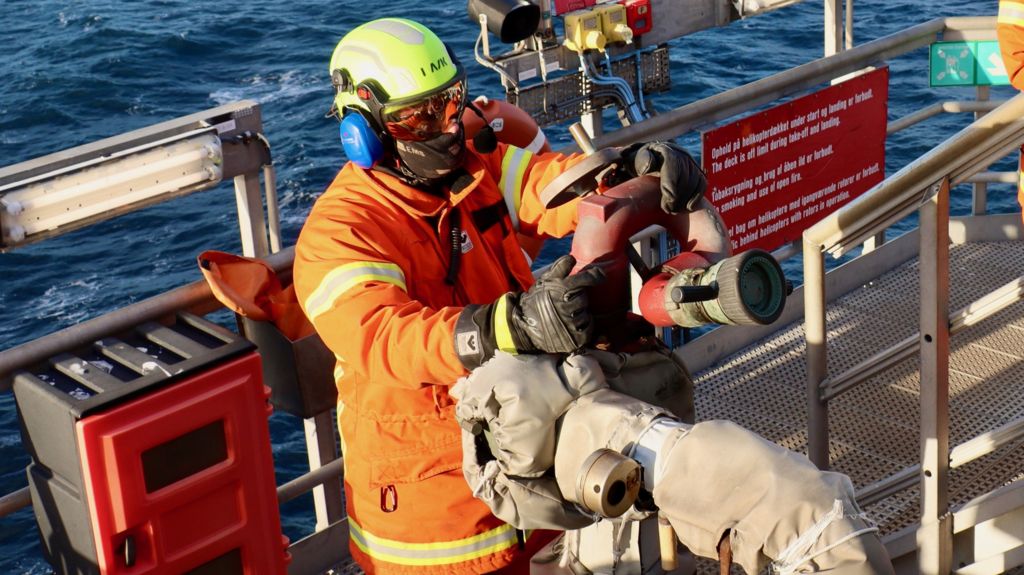
A revolutionary transformation is underway in the North Sea, where aging oil infrastructure is being repurposed for climate solutions. The Greensand Future project, spearheaded by British multinational Ineos Energy, is converting the nearly-depleted Nini oil field into Europe’s first large-scale offshore carbon storage facility.
Located 250 kilometers off Denmark’s western coast, the Siri platform serves as the operational hub for this ambitious initiative. Instead of extracting fossil fuels, engineers will now inject thousands of tonnes of captured CO2 into the same geological formations that once held oil and gas. “Instead of pulling oil and gas up from the ground, we’re going to inject CO2 into the ground instead,” explains Ineos Energy CEO Mads Gade.
The project represents a significant scaling of Carbon Capture and Storage (CCS) technology, with plans to store approximately 400,000 tonnes of CO2 this year alone. By 2030, the consortium aims to increase capacity to eight million tonnes annually – equivalent to nearly 40% of Denmark’s emission reduction targets.
This initiative arrives as international climate bodies including the Intergovernmental Panel on Climate Change (IPCC) and International Energy Agency (IEA) have recognized carbon capture as an essential tool for achieving climate goals. The European Union has similarly endorsed CCS as necessary for reaching net-zero emissions by 2050.
The North Sea’s geological characteristics make it ideally suited for carbon storage. According to Niels Schovsbo, senior researcher at the Geological Survey of Greenland and Denmark, the region’s porous rock formations and thick clay layers provide natural containment, similar to how they trapped oil and gas for millions of years.
However, the technology faces criticism from environmental groups. Helene Hagel, head of climate policy at Greenpeace Denmark, cautions that CCS might discourage essential emission reductions and could create problems for future generations by occupying seabed storage capacity.
Despite concerns, CCS projects are advancing rapidly across Northern Europe. Norway’s Northern Lights project began operations last August as the world’s first commercial carbon storage service, while the UK is developing multiple capture clusters including Scotland’s Acorn Project.
The transition also offers new opportunities for offshore workers. Maintenance manager Peter Bjerre notes that skills previously used for maintaining turbines and gas compressors will now be applied to high-pressure pumps for CO2 injection, representing a significant workforce transformation in the green transition.