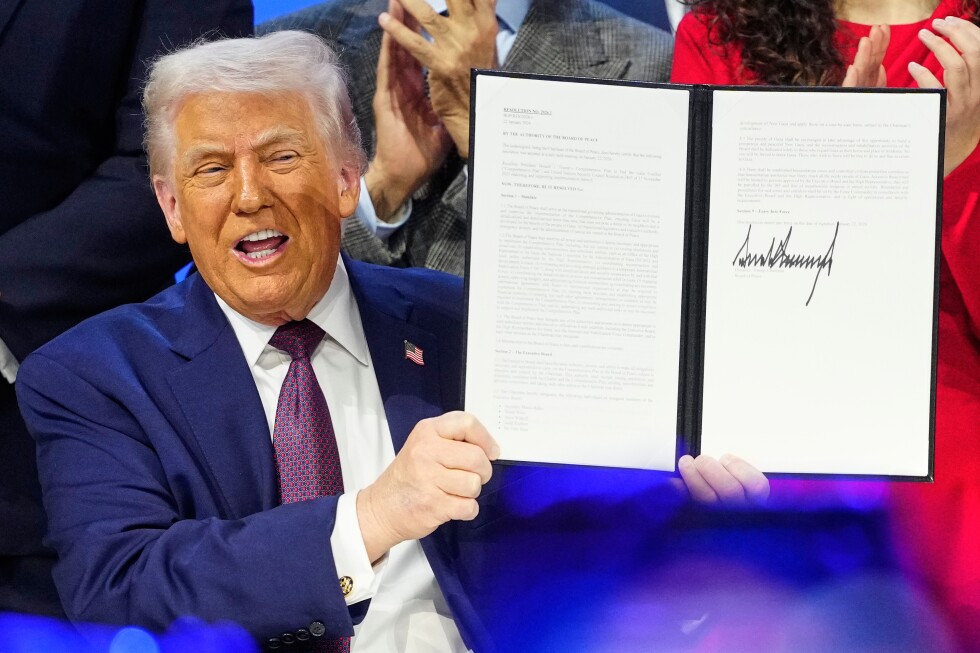
In a significant diplomatic setback, former President Donald Trump’s ambitious proposal to expand his ‘Board of Peace’ beyond Gaza mediation has encountered widespread international resistance. Major global powers including China, France, Russia, and the United Kingdom have unanimously declined participation in what many perceive as an attempt to undermine the United Nations’ authority.
The board, initially conceived as a limited framework for overseeing Gaza’s post-conflict future, underwent substantial mission creep under Trump’s direction. The controversial charter granted Trump permanent leadership with veto powers over membership and actions, while envisioning a global conflict mediation role that directly challenged the UN Security Council’s mandate.
Secretary of State Marco Rubio attempted damage control, emphasizing that “this is not a replacement for the UN” and narrowing the board’s immediate focus to Gaza ceasefire implementation. However, Trump’s simultaneous promotion of the board as a potential UN alternative created diplomatic friction that overshadowed its original purpose.
The rejection manifested through multiple channels: formal Security Council statements, public declarations, and private diplomatic communications. French President Emmanuel Macron characterized the initiative as raising “serious questions regarding UN principles,” while Spain’s refusal cited the exclusion of Palestinian Authority representation. British Prime Minister Keir Starmer explicitly reaffirmed Britain’s “enduring support for the UN and international rules-based system” before declining membership.
Despite attracting approximately 26 of 60 invited nations—primarily Muslim countries seeking influence in Gaza discussions—the board failed to secure endorsement from any permanent Security Council members or major European economies. Human Rights Watch’s UN director Louis Charbonneau dismissed the initiative as a “pay-to-play club of human rights abusers” rather than a legitimate international organization.
Analysts from the International Crisis Group suggest the expansion fundamentally compromised the board’s credibility, transforming what might have been a viable Gaza-focused initiative into a perceived “Trump fan club” that deterred potential supporters. While eight Muslim nations joined to advance Palestinian interests, experts doubt the board’s capacity to evolve into a meaningful alternative to UN mechanisms.