The European Union has formally designated Iran’s Islamic Revolutionary Guard Corps (IRGC) as a terrorist organization in response to Tehran’s violent suppression of recent protests. This landmark decision places the powerful Iranian military force on the EU’s terror list alongside groups like al-Qaeda and Islamic State.
EU foreign ministers unanimously approved the measure, with bloc diplomat Kaja Kallas characterizing it as a ‘decisive step’ against ongoing repression. ‘Repression cannot go unanswered,’ Kallas stated, emphasizing that regimes that kill their own people are working toward their demise.
The designation follows what French Foreign Minister Jean-Noel Barrot described as ‘the most violent repression in Iran’s modern history,’ with human rights groups estimating thousands of protesters were killed by security forces during December and January unrest. The EU simultaneously imposed new sanctions on six entities and 15 Iranian officials, including Interior Minister Eskandar Momeni and Prosecutor General Mohammad Movahedi Azad, for their roles in suppressing peaceful demonstrations.
Notably, France reversed its previous hesitation about blacklisting the IRGC over concerns about severing diplomatic channels. Italy led the push for designation, ultimately gaining unified European support.
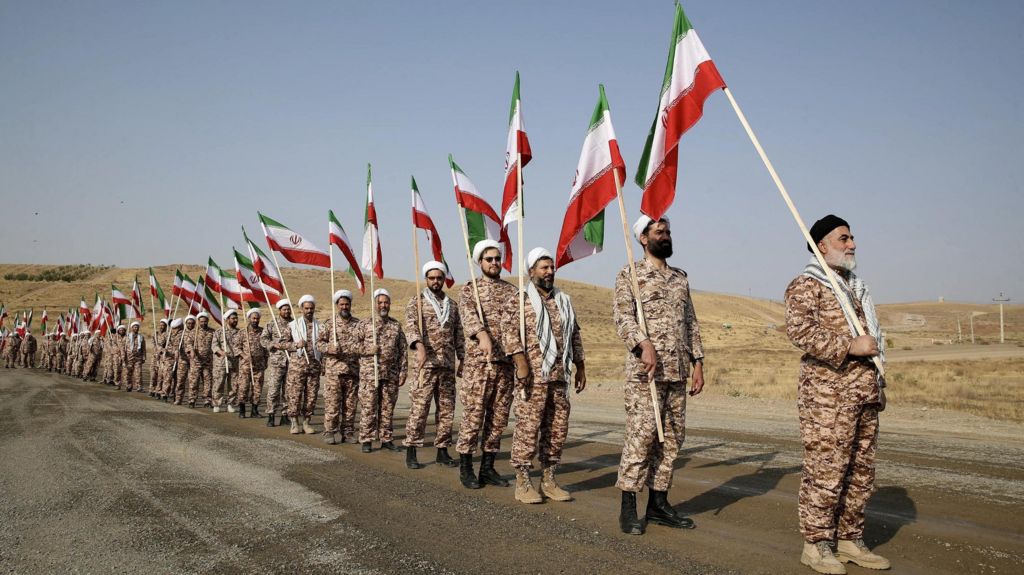
The IRGC, established after Iran’s 1979 revolution to defend its Islamic system, represents Iran’s most powerful military force with approximately 190,000 active personnel across land, air, and sea domains. The organization wields substantial economic and political influence while directing overseas operations through allied governments and armed groups. Domestically, it controls the Basij Resistance Force paramilitary group, which has been instrumental in suppressing dissent.
EU terrorist designations trigger automatic sanctions including travel bans and asset freezes aimed at dismantling support networks. Despite the move, Kallas indicated expectations that diplomatic channels with Iran would remain open.
The development occurs alongside heightened tensions with the United States, where President Donald Trump has warned that ‘time is running out’ for Iran to negotiate on its nuclear program. Trump threatened military action ‘far worse’ than previous strikes if no agreement is reached, claiming a ‘massive Armada’ was advancing toward Iran.
Iranian officials have responded defiantly, with Foreign Minister Abbas Araghchi stating Iran’s armed forces were ready ‘with their fingers on the trigger’ to respond to any aggression. Army chief Amir Hatami vowed a ‘crushing response’ following reports that military regiments had received 1,000 new drones.
International assessments of the crackdown’s human toll vary significantly due to internet restrictions imposed by Iranian authorities. While US-based HRANA confirms over 6,301 deaths including 5,925 protesters, Norway-based IHR estimates the final toll could exceed 25,000. Iranian authorities acknowledge approximately 3,100 fatalities but claim most were security personnel or bystanders attacked by ‘rioters.’
The EU joins Australia, Canada, and the United States in designating the IRGC as terrorist, while the United Kingdom maintains its policy of not commenting on potential proscriptions.