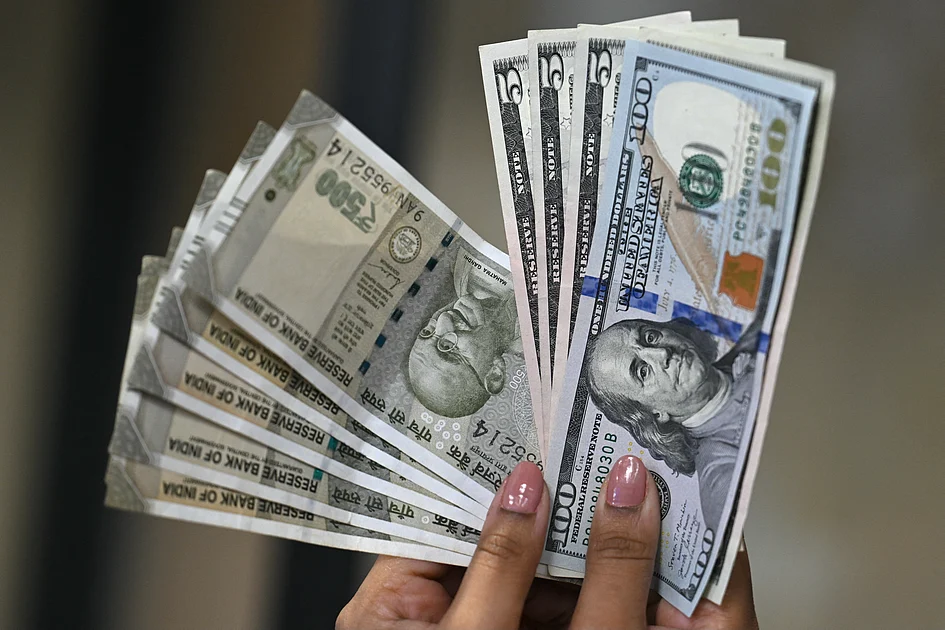
The Indian rupee plunged to an unprecedented low against the US dollar on Thursday, January 29, 2026, driven by substantial dollar demand from corporate hedging activities and the maturation of non-deliverable forward positions. The currency closed at 91.9550 per dollar, marking a 0.2% decline from its previous session, after briefly touching 91.9850 during trading hours.
The Reserve Bank of India (RBI) executed strategic interventions to prevent the rupee from breaching the psychologically critical threshold of 92 per dollar, according to market traders. This defensive action created a complex policy dilemma for the central bank, as its foreign exchange market operations effectively counteract its simultaneous efforts to enhance banking system liquidity.
The currency’s weakness has generated ripple effects across India’s financial markets. Government bonds experienced downward pressure, while interest rate swaps markets showed significant strain. Overnight index swap rates have climbed to levels that anticipate monetary tightening, despite macroeconomic indicators suggesting no fundamental justification for such policy moves.
This currency depreciation presents a puzzling contrast to India’s robust economic performance. Official government projections indicate growth between 6.8%-7.2% for the upcoming fiscal year beginning in April, representing only a modest deceleration from the current year’s 7.4% expansion. The government’s annual economic survey noted that the rupee’s valuation fails to accurately reflect the nation’s strong economic fundamentals, while acknowledging that currency depreciation could partially mitigate the impact of elevated US tariffs.
Foreign investor apprehension continues to weigh heavily on Indian markets. January has witnessed net foreign equity outflows exceeding $4 billion, compounding the record $19 billion withdrawn throughout 2025. Market analysts attribute this capital flight to geopolitical uncertainties and diminished investor confidence. DBS Bank India projects further rupee weakness to 93-94 levels this year as inbound investment flows continue to diminish.
Financial experts emphasize that a comprehensive trade agreement with the United States would significantly improve market sentiment toward Indian assets. However, the current geopolitical landscape complicates long-term growth projections for Asia’s third-largest economy.