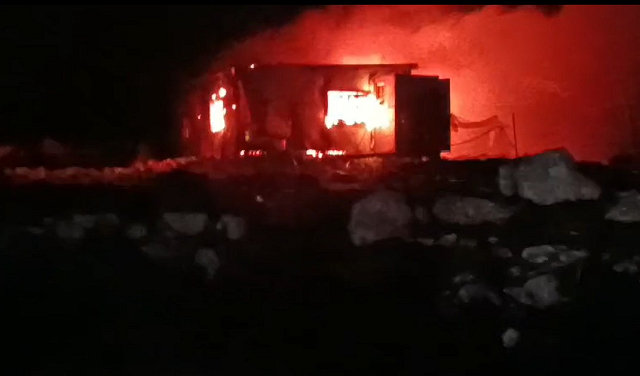
A coordinated assault by Israeli settlers targeted the Khallat al-Sidra Bedouin community northeast of occupied East Jerusalem on Wednesday night, resulting in extensive property destruction through arson attacks. According to official reports from the Palestinian Authority’s Jerusalem Governorate, armed settlers not only set multiple homes ablaze but also physically assaulted residents before Israeli military forces entered the area.
The violence was preceded by settlers blocking the community’s sole access road, effectively imposing a movement lockdown on residents. Viral video footage circulating on social media platforms shows structures completely engulfed in flames as desperate residents attempted to extinguish the fires with limited resources.
This incident represents the latest in a series of escalating attacks against the Khallat al-Sidra community, which has experienced intensified violence in recent days including beatings of both residents and international activists, destruction of vehicles and animal shelters, and systematic seizure of critical infrastructure including solar panels and surveillance equipment.
Parallel land seizure attempts were reported in the neighboring Ma’azi Jaba’ community, where approximately 200 Palestinians face repeated attacks allegedly aimed at territorial expansion for the Adam settlement and its connection to the Benjamin settlement. Such settlement construction violates international law, which explicitly prohibits building in occupied territories.
Settler violence against Palestinian communities in the occupied West Bank and Jerusalem has operated with impunity for years, frequently under military protection. Since the beginning of the Gaza conflict, official data from the Wall and Settlement Resistance Commission documents 4,723 settler violence cases in 2025 alone. Over the past two years, more than 1,000 Palestinians, including 217 minors, have been killed by Israeli forces and settlers in the West Bank.