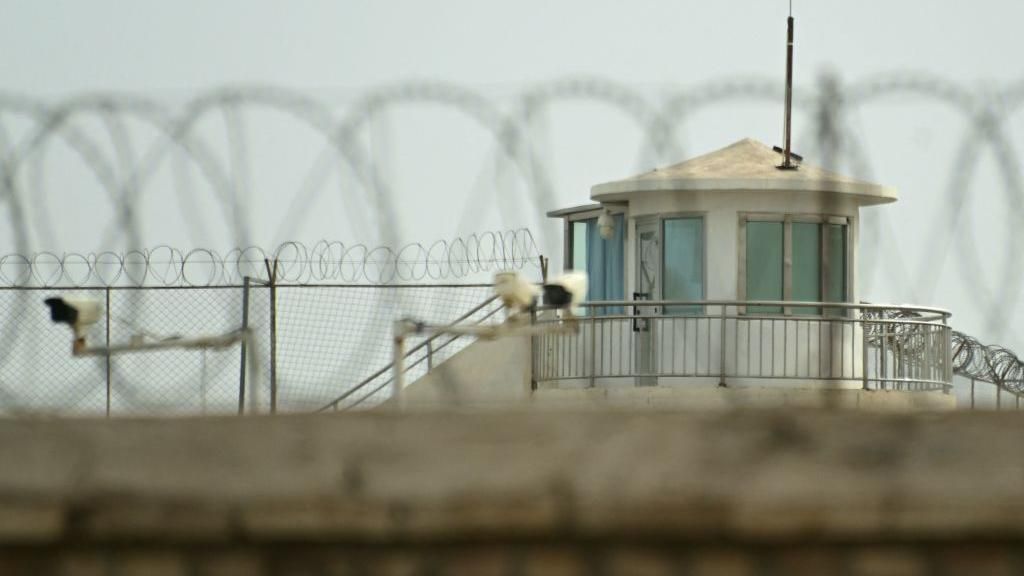
A United States immigration court has granted political asylum to Chinese national Guan Heng after determining he possessed legitimate grounds to fear persecution upon returning to China. The 38-year-old had clandestinely documented facilities in China’s northwestern Xinjiang region, where international human rights organizations allege over one million ethnic Uyghurs remain involuntarily detained.
Guan’s legal journey began when he entered the US illegally in 2021 and subsequently filed for asylum. His case encountered complications when he was detained during a mass deportation initiative under the Trump administration in August. Initial plans to deport him to Uganda were abandoned in December following public outcry regarding his situation.
During Wednesday’s judicial proceedings, Guan testified via video link from a US correctional facility that his motivation for filming was humanitarian rather than strategic. ‘I sympathized with the persecuted Uyghurs,’ he stated when questioned about whether his documentation effort was designed to support an asylum claim.
The evidentiary footage, published primarily on YouTube after Guan’s departure from China, shows what he characterizes as ‘concentration camps’ in Xinjiang. His circuitous route to the United States included transit through Hong Kong, Ecuador, and the Bahamas before reaching Florida.
This case unfolds against a backdrop of serious international allegations against China. Multiple nations including the United States, United Kingdom, Canada, and the Netherlands have accused China of committing crimes against humanity and potential genocide against Xinjiang’s Uyghur Muslim population. A 2018 UN human rights committee report cited credible evidence indicating China detained up to one million individuals in ‘counter-extremism centers’ within the heavily restricted region.
China maintains consistent denial of all human rights abuse allegations, officially characterizing the facilities as ‘re-education camps’ essential for terrorism prevention and Islamist extremism eradication. Meanwhile, exiled Uyghurs continue reporting family members who have disappeared or live under constant surveillance.
Additional evidence emerged through a 2022 BBC acquisition of police files detailing camp operations, including standard deployment of armed guards and implementation of shoot-to-kill protocols for escape attempts. Camp survivors have provided harrowing accounts of systemic physical, psychological, and sexual torture, with women reporting widespread rape and sexual abuse.
Guan’s legal representative, Chen Chuangchuang, characterized the case as a ‘textbook example of why asylum should exist,’ emphasizing America’s ‘moral and legal responsibility’ to provide protection. The presiding judge recognized the validity of Guan’s fears, noting his family in China had already faced interrogation, thus establishing his legal eligibility for asylum. The Department of Homeland Security retains the right to appeal within a 30-day window.