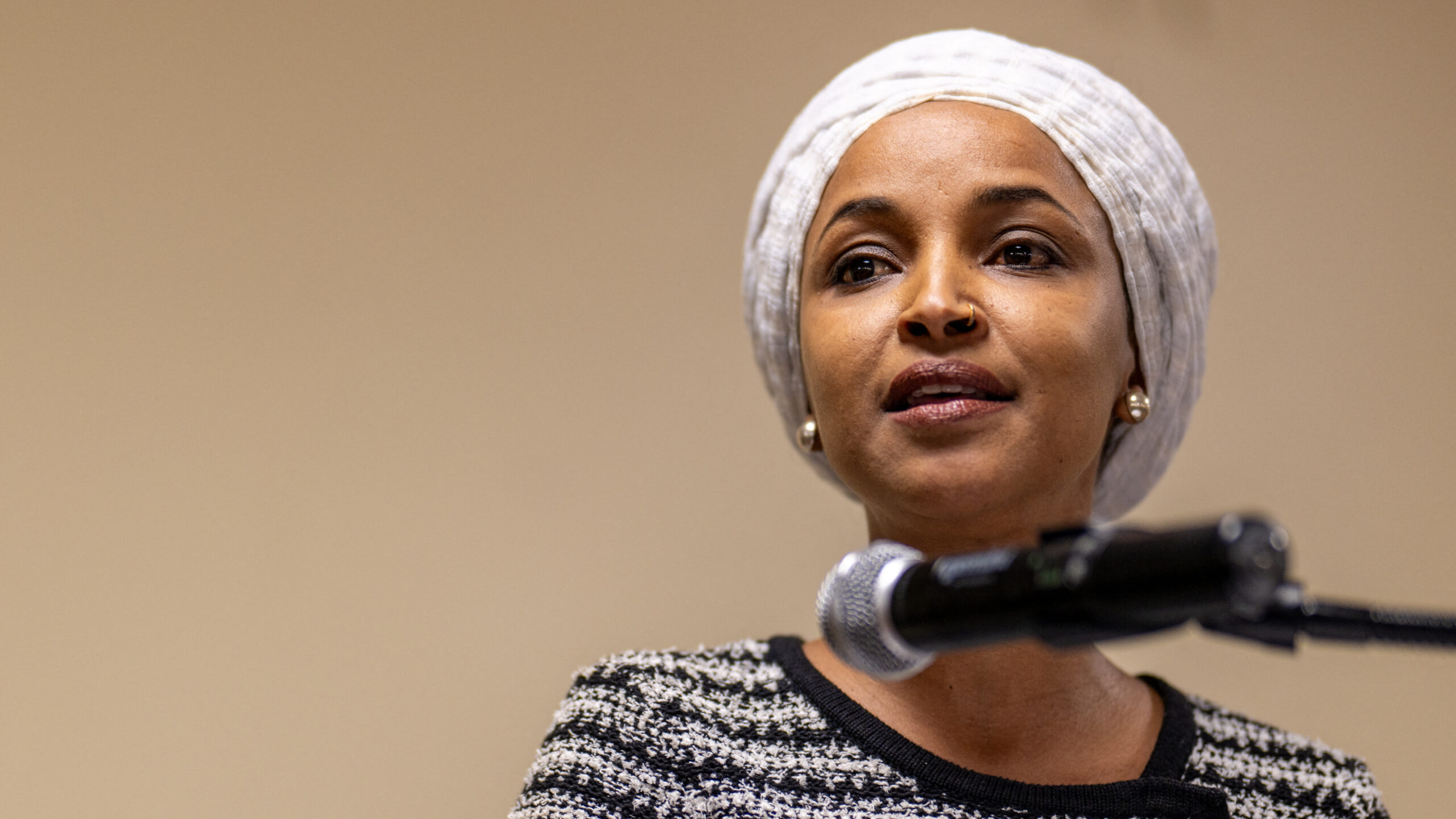
A town hall meeting in Minneapolis, Minnesota, descended into chaos on Tuesday when an assailant sprayed Democratic Congresswoman Ilhan Omar with an unidentified chemical substance. Authorities have characterized the incident as a targeted attack occurring against a backdrop of intensifying political and social tensions in the region.
The assailant, identified by police as 55-year-old Anthony Kazmierczak, rushed toward the stage moments after Representative Omar, who is of Somali origin, called for the abolition of Immigration and Customs Enforcement (ICE). Security personnel swiftly subdued the individual, and forensic analysis later revealed the syringe contained a light-brown liquid emitting a potent, vinegar-like odor, which remains under official identification.
Despite the alarming assault, Congresswoman Omar demonstrated remarkable composure, continuing her address for approximately 25 minutes following the disruption. She later took to social media to declare, “This small agitator isn’t going to intimidate me from doing my work. I don’t let bullies win.”
The attack occurs within a complex socio-political climate. Minnesota has experienced repeated clashes between ICE agents and the public following operations ordered by former President Donald Trump targeting immigrants. Trump has historically directed inflammatory rhetoric toward Somalis, once referring to them as “garbage” and suggesting they “go back to their country.” Following this incident, Trump further escalated tensions by suggesting to ABC News that Omar may have staged the attack herself, calling her “a fraud.”
This event has ignited fierce debate regarding political violence and incendiary rhetoric. Journalist Mehdi Hasan and numerous online commentators have drawn direct connections between the violent act and the persistent anti-immigrant and anti-Somali discourse propagated by Trump and certain Republican figures. Data from the U.S. Capitol Police reveals a disturbing 57% increase in investigated threats against lawmakers between 2024 and 2025, with Omar consistently ranking among the most frequently targeted officials.
The political landscape is further complicated by the Feeding Our Future scandal, a massive fraud case in which a Minnesota nonprofit misappropriated hundreds of millions from federal nutrition programs during the COVID-19 pandemic. While dozens have been indicted and over fifty convicted, some GOP figures have aggressively, and thus far without evidence, attempted to link Omar and Minnesota Governor Tim Walz to the controversy through community ties.
In the aftermath, responses have been mixed. Governor Walz condemned the attack and called for an immediate end to “cruel, inflammatory, dehumanizing rhetoric.” Republican Congresswoman Nancy Mace expressed being “deeply disturbed” by the physical attack on a fellow legislator, despite her stated vehement disagreements with Omar, which have included past calls for her deportation. The incident has profoundly underscored the dangerous intersection of political polarization, violence, and the treatment of historically marginalized public officials.