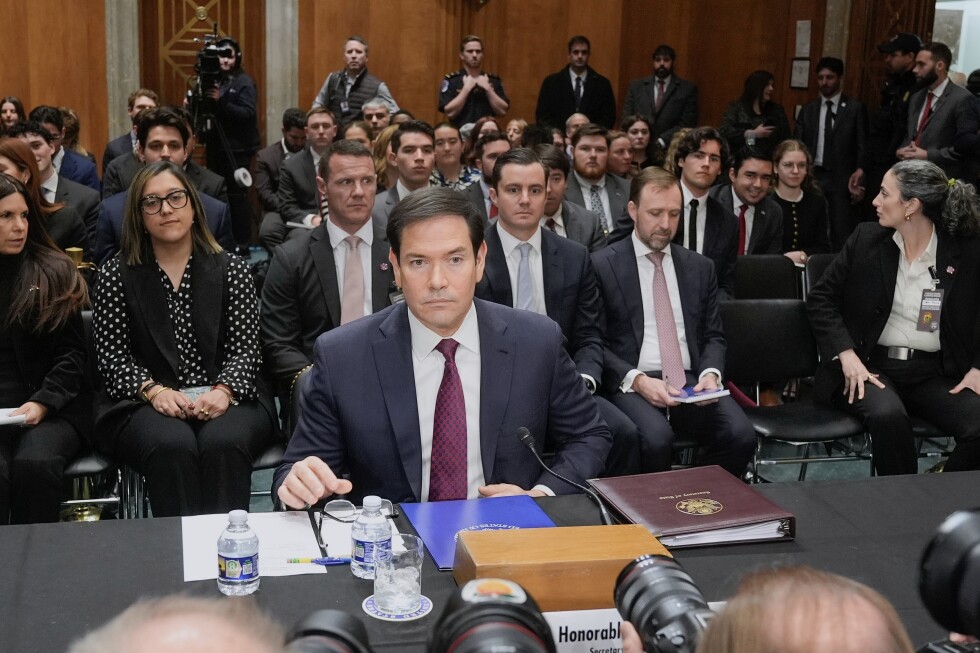
The United States government has unveiled a groundbreaking framework for managing Venezuela’s oil revenue under stringent American oversight. Secretary of State Marco Rubio disclosed before the Senate Foreign Relations Committee that previously sanctioned Venezuelan oil would now be permitted for international sale, with all proceeds channeled into a specially designed account subject to U.S. Treasury supervision.
This financial mechanism, initially established in Qatar to circumvent legal complications with American creditors, will serve as the central repository for Venezuela’s oil earnings. Rubio emphasized that the arrangement represents an interim measure to prevent complete economic collapse during Venezuela’s political transition. The funds will be exclusively allocated for essential public services including healthcare, law enforcement, and critical infrastructure maintenance.
The development follows the recent capture of former President Nicolás Maduro, whose administration allegedly diverted oil profits to benefit corrupt officials and privileged international partners like China through discounted arrangements. Under the new system, Venezuela’s interim leadership will receive specific instructions on permissible expenditures, with regular audits conducted to ensure compliance.
Democratic lawmakers, including Senator Chris Murphy of Connecticut, expressed serious concerns about the potential for favoritism toward oil companies with Trump administration connections. Murphy characterized the arrangement as effectively seizing a sovereign nation’s resources ‘at gunpoint’ while determining financial allocations for 30 million citizens.
Despite these concerns, the State Department maintains that the mechanism provides necessary stability during Venezuela’s recovery period. Approximately $3 billion in anticipated oil revenue is expected to flow through the oversight account, which functions as Venezuelan property with U.S. sanctions acting as a blocking mechanism against misuse.